

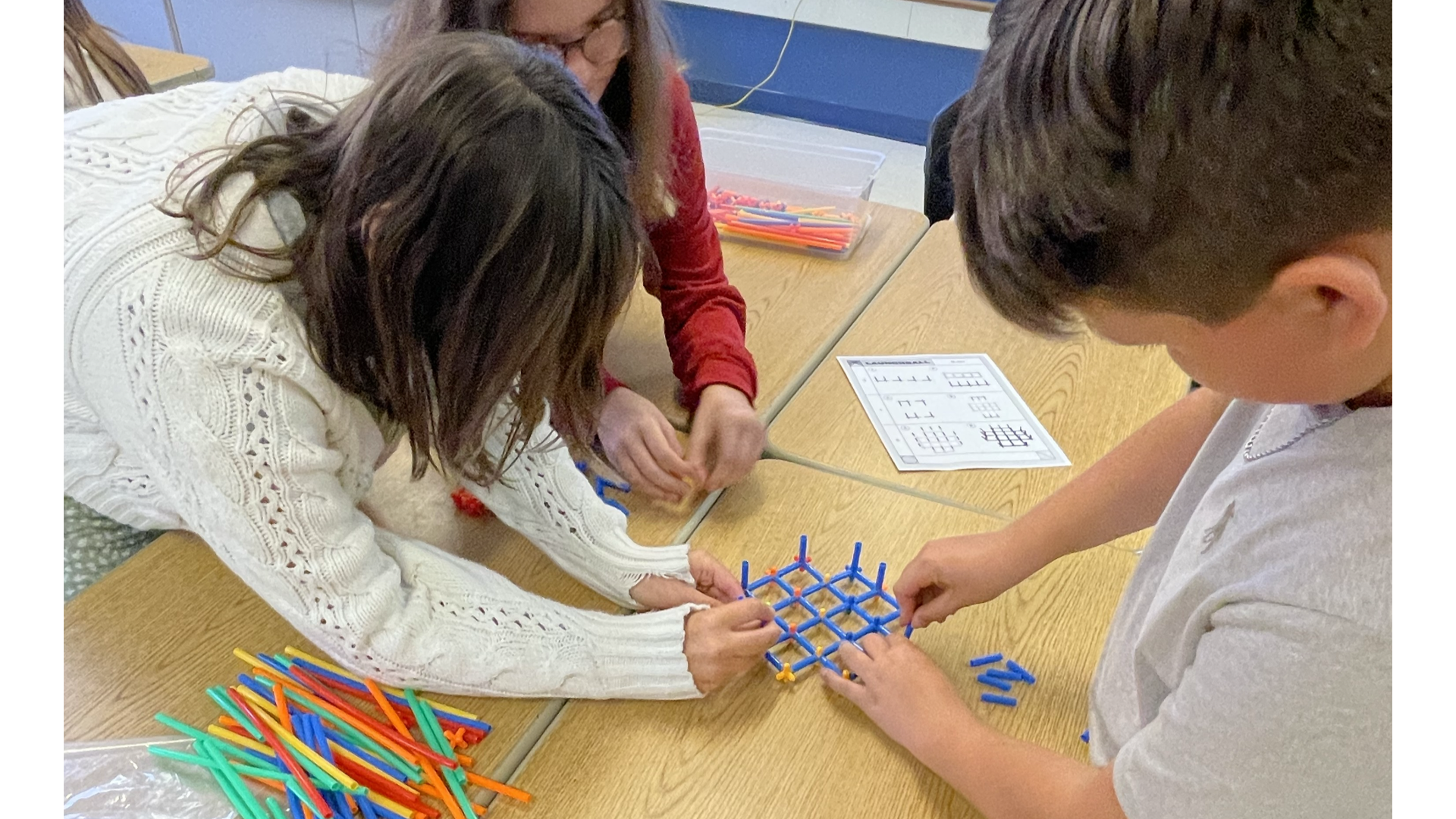
Design Game X is a 10-session, 15–20 hour hands-on Math Lab. Students play oversized physical fraction games — then design and build their own. They arrange cards on oversized game boards, launch marbles down tracks, race ping pong balls along number lines, and ultimately create an original fraction game using connector straws, craft materials, and card templates. The lab culminates in a Game Expo where teams present and play each other's creations.
Students start by playing structured games that build fraction understanding through physical action — handling, placing, comparing, and measuring. In the second half, they apply those concepts as design constraints: to build a working game, the fraction math has to be right. Students move from guided play to open-ended design, using fractions throughout as tools for building something real.
How the Curriculum Works
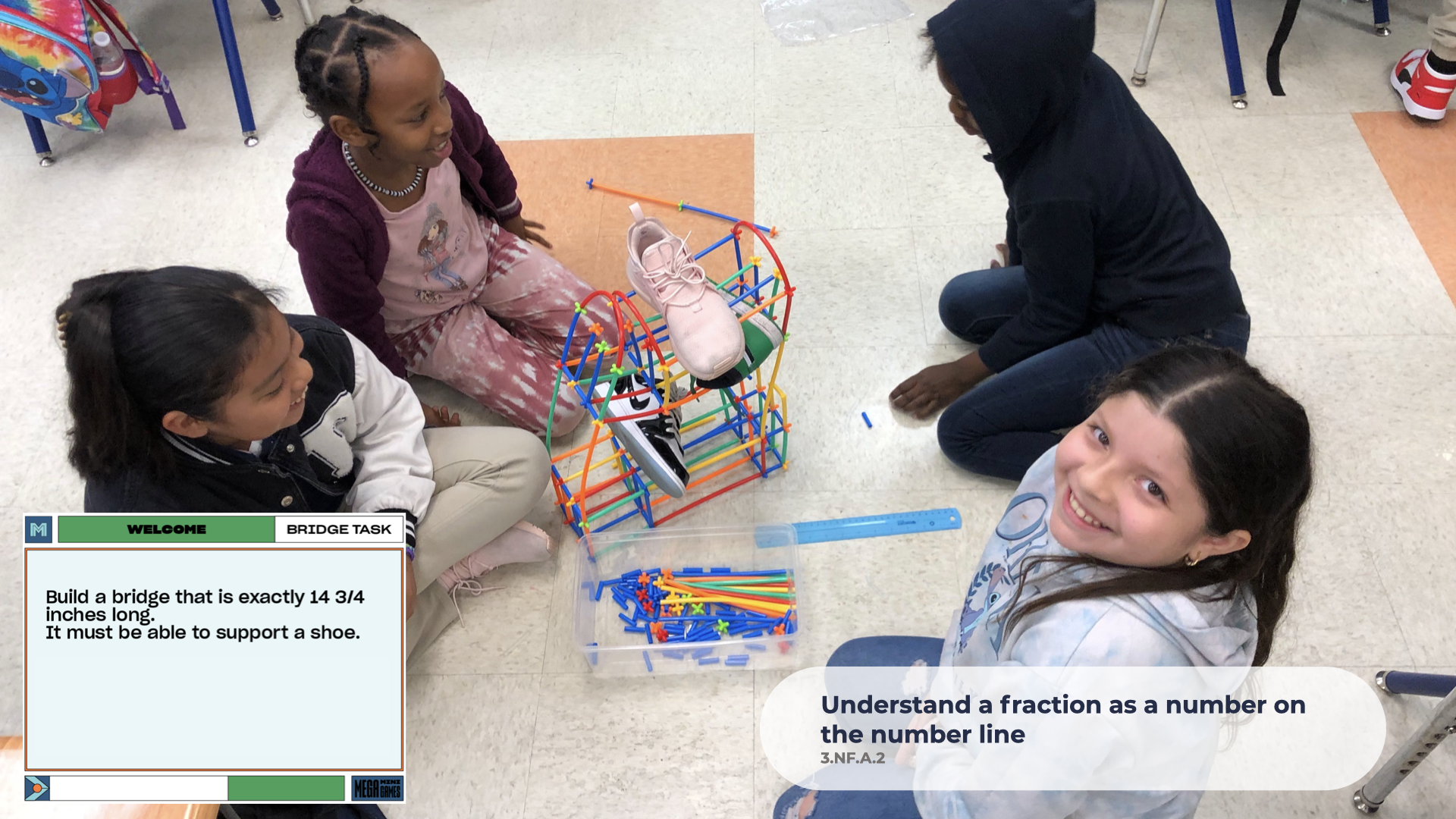
The first five lessons put students inside four structured fraction games, each targeting a different concept. The second five lessons flip students from players to designers — they create, build, test, and present their own original fraction game.
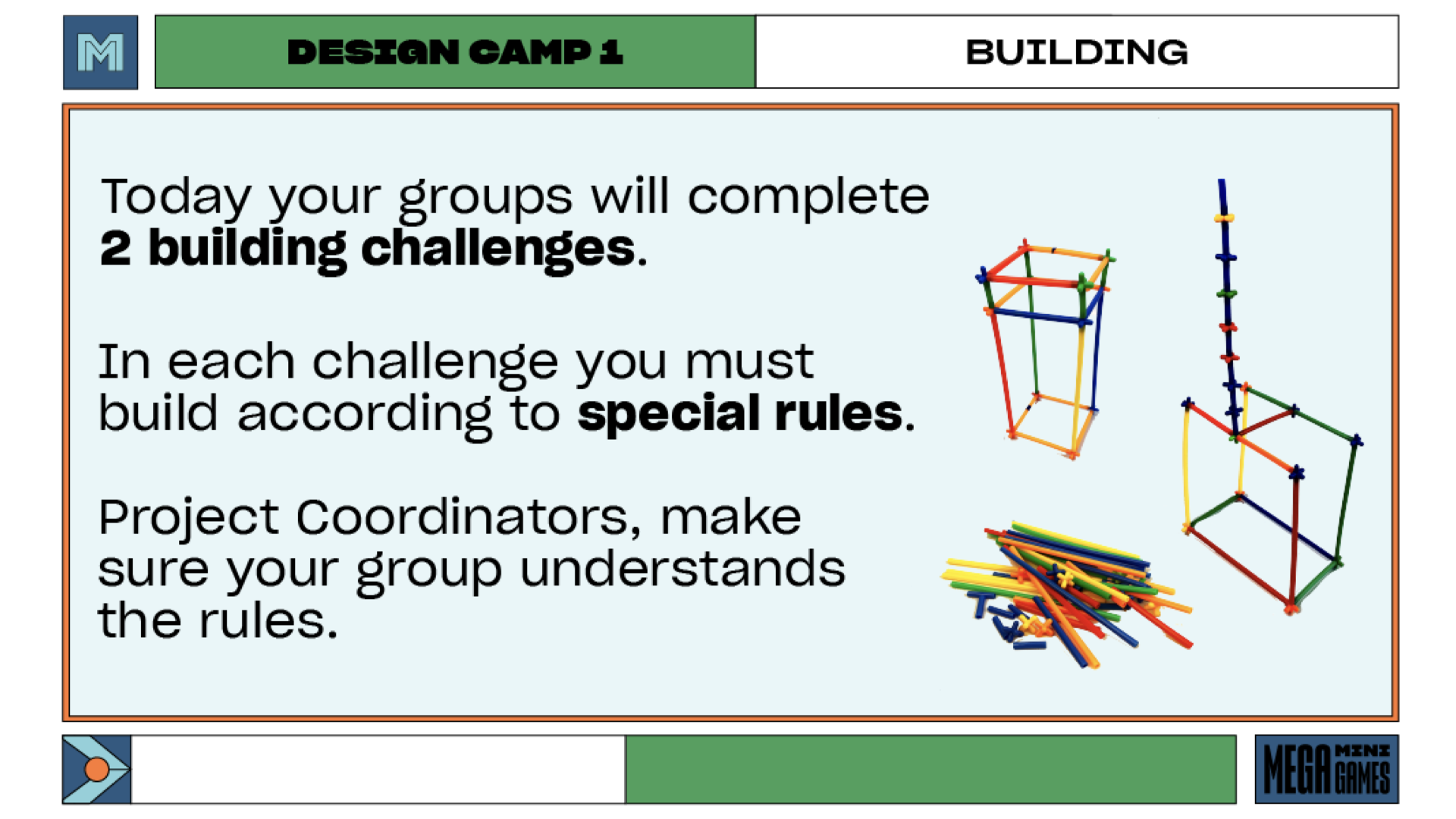
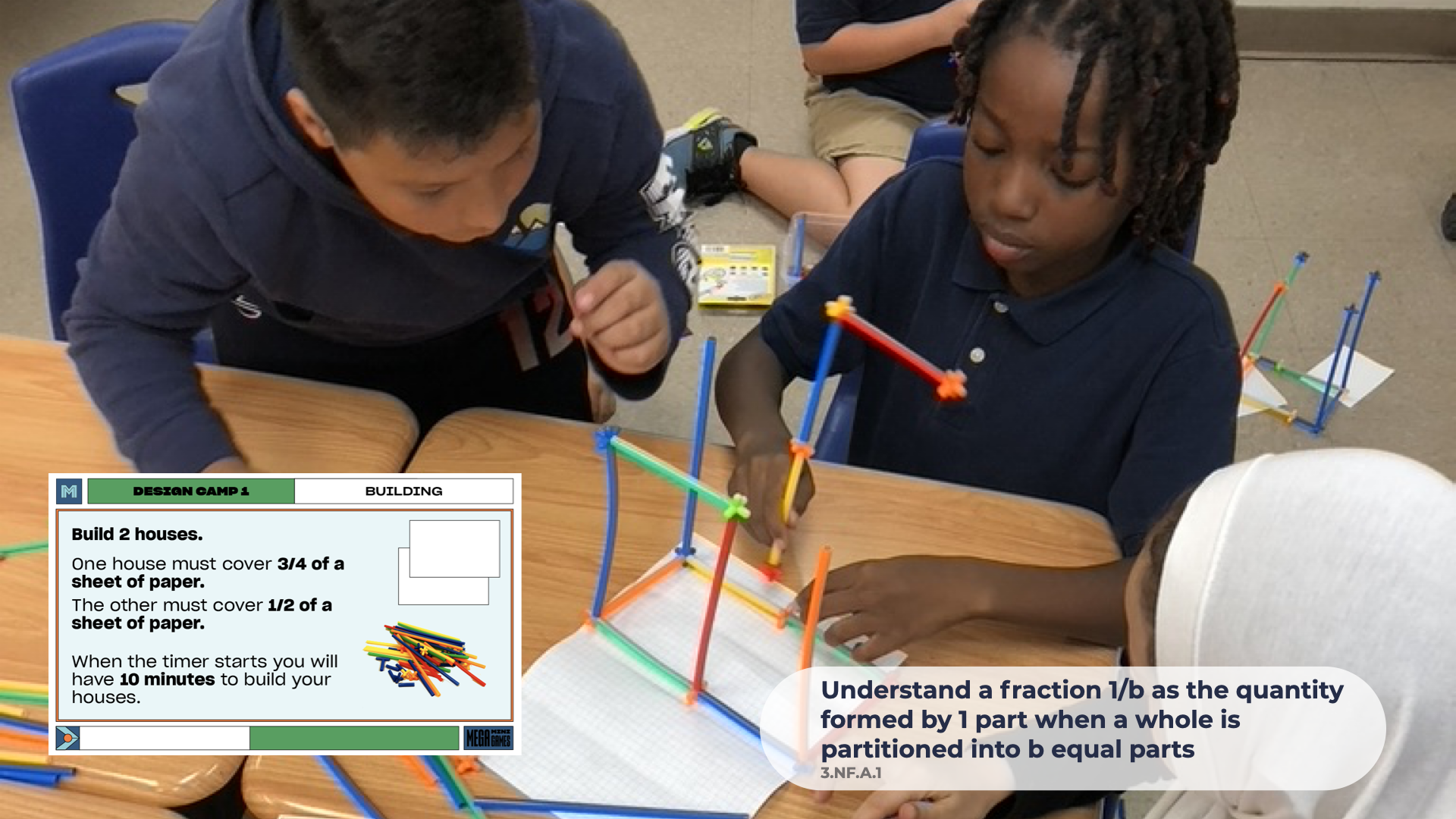
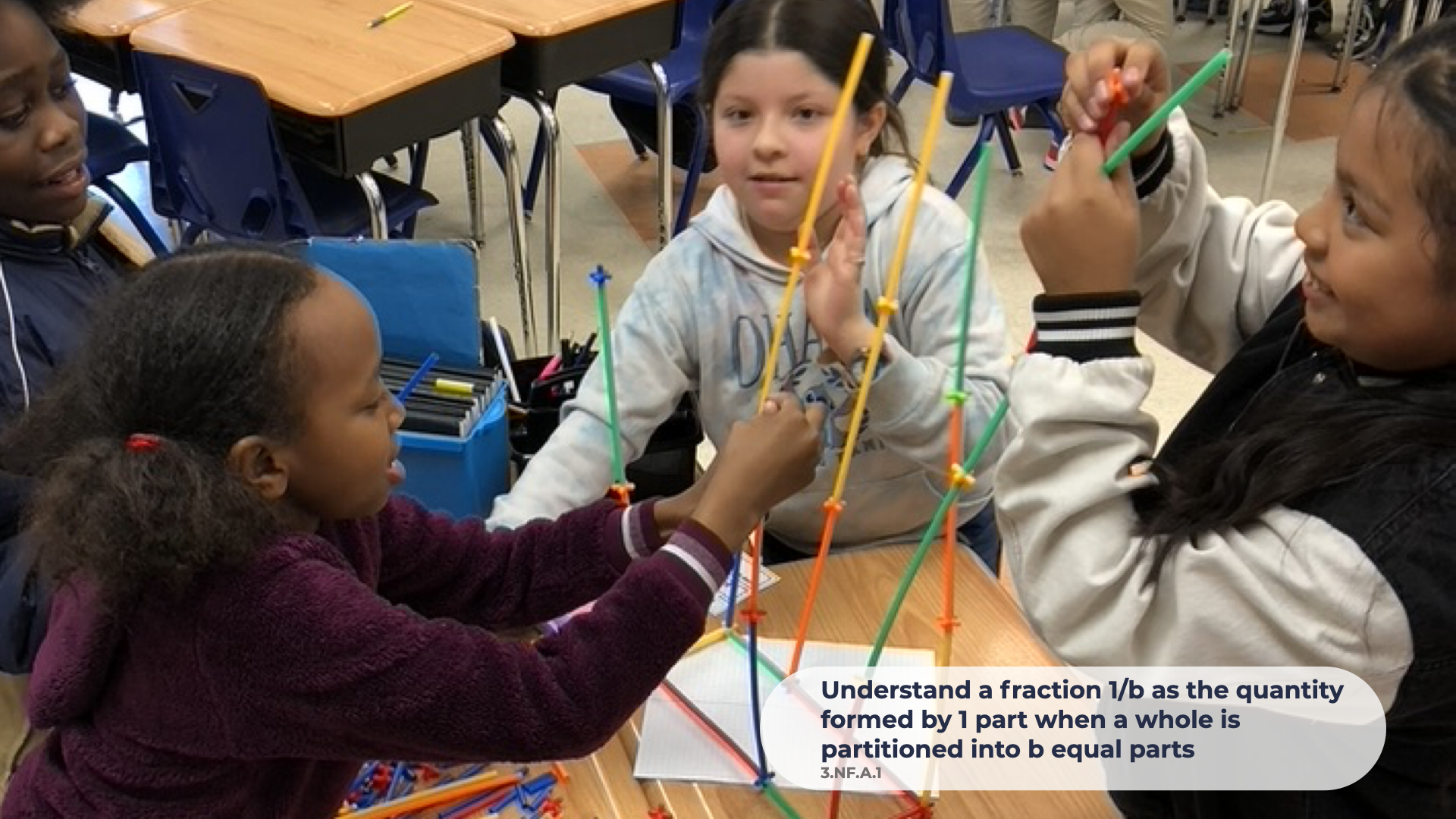
- Lesson 1: Build houses and towers out of physical materials, partitioning sets and wholes into fractional parts.
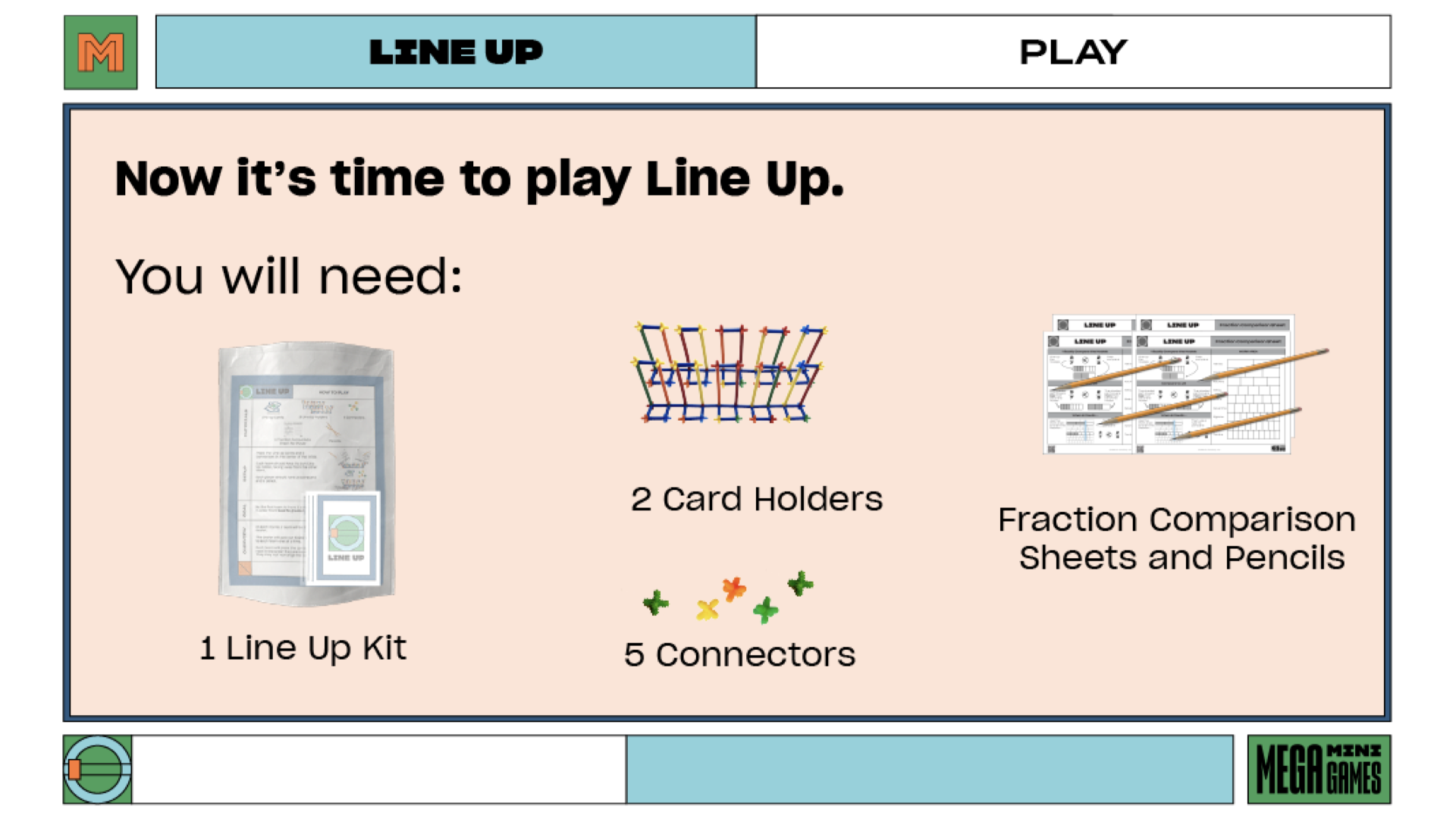
- Lesson 2: Play Line Up on oversized game boards — arranging fraction cards in order, comparing denominators, proving which fraction is larger.
- Lesson 3: Play Launchball — launch marbles down a track, adding fractions with unlike denominators to calculate total distance.
- Lesson 4: Play Finish Line — race ping pong balls along a number line and place fractions at precise positions.
- Lesson 5: Play Game X — a mystery game that combines all four fraction concepts.
- Lessons 6–8: Create a game world, draft a plan, and build the game using connector straws and craft materials. Each design task requires fraction reasoning — sizing components, writing rules with fractional quantities, testing that the math works.
- Lesson 9: Write and perform a commercial for the game.
- Lesson 10: Game Expo — teams present and play each other's creations.
Who It's For
- 4th grade teachers looking for hands-on supplemental curriculum in fractions
- 3rd and 5th grade teachers who need fraction review or enrichment
- Afterschool and summer program directors who want structured, ready-to-run math programming with all materials included
- Curriculum coordinators looking for standards-aligned fraction supplements that work alongside any core curriculum — no adoption process required
What's in the Kit
All materials are physical and fully durable — buy once, use every year.
- Oversized game boards (Launchball, Finish Line)
- Polypropylene track (Launchball)
- Marbles, ping pong balls, and dice
- Connector straws for building structures
- Game X design mats, card templates, planners
- Game World poster, jobs poster, teamwork poster
- Construction paper, glue sticks, tape
- Quick reference booklet
10 Lessons at a Glance
Every lesson runs through a web-based slide portal at algebrastudio.org. Howie is the on-screen instructor in embedded video mini-lessons — he introduces each task, demonstrates the math, and walks students through the activity. The slides run the session. Open the kit, follow the slides, and go.
Lessons run between 45 and 90 minutes, with some extending longer at your discretion. The curriculum works as a daily block (3–4 weeks), a twice-weekly enrichment (5–10 weeks), or an afterschool/summer program. It supplements any core curriculum — students learn fraction concepts through their regular instruction, and Design Game X is where they apply those concepts with physical materials and collaborative problem-solving.
Sample Lessons
Standards by Lesson
Design Game X covers fractions as parts of a whole, comparing and ordering fractions, adding fractions with unlike denominators, and fractions on a number line — standards already in your grade 4 scope. It doesn't replace your core instruction on these topics. It gives students a place to apply what you're already teaching, using physical materials and collaborative problem-solving.
| # | What Students Do | Standards |
|---|---|---|
| 1 | Build houses & towers — fractions as parts of a set & whole | 3.NF.A.1 |
| 2 | Play Line Up — compare & order fractions | 4.NF.A.2 |
| 3 | Play Launchball — add fractions with unlike denominators | 4.NF.B.3, 5.NF.A.1 |
| 4 | Play Finish Line — fractions on number line; multiply by whole numbers | 3.NF.A.2, 5.NF.B.4 |
| 5–9 | Design, build & test original fraction games | 3.NF–5.NF |
| 10 | Game Expo — present, play & evaluate games | 3.NF–5.NF |
Career & Workplace Connections
Each Design Game X lesson includes a one-page Workplace Connection brief that profiles a professional who uses the same math students are learning that day. Examples include:
- A toy product designer who uses fractions and measurement to prototype game components and calculate material dimensions
- A packaging engineer who works in fractional units to size boxes, inserts, and display packaging for retail products
- A quality assurance analyst who tracks defect rates as fractions of total production runs and uses fractional tolerances in inspection
These profiles connect academic content to career pathways across product development, manufacturing, and entertainment.
Professional Development
It's easy to lead Design Game X — the teaching portal provides step-by-step guidance.
Professional development for Algebra Studio focuses on teaching practice — structuring hands-on learning, facilitating collaborative problem-solving. Led by a nationally recognized math educator, teachers work through a Design Game X session as learners — arranging fraction cards on oversized game boards, launching marbles down tracks to add fractions, building game prototypes with connector straws. Then they unpack the teaching moves with the facilitator: how to structure the teamwork, where students get stuck, what questions to ask, when to step back.
Details
- Half-day workshop, up to 30 participants
- $3,495
- Led by a nationally recognized math educator
- Teachers experience a full lab session as learners, then unpack the pedagogy
- Fundable through Title II-A professional development funds
Evaluation Partnership
Structure a rigorous study using your own assessments, your own comparison groups, and your own timeline.
Research Design Options
Simple Pre/Post
Administer a brief assessment before and after the Lab, using district benchmark questions or the Algebra Studio assessment.
Delayed-Start RCT
Half of participating classrooms begin first, the other half a few weeks later. Assess all students after the first group completes the project. Use an Algebra Studio pre/post or your own assessment.
Matched Comparison
Compare participating classrooms to non-participating classrooms with similar demographics and prior achievement.
Implementation + Perception Study
Document implementation fidelity, student engagement, and teacher perception alongside quantitative measures.
Kit
Teams are 4 students each.
Full Kit
Full-class including materials for all 7 Design Game X teams.
- 7 team material packs
- Complete game board library
- Game design kits with connector straws and craft supplies
Cost Per Student
$1,295 ÷ 28 students = $46 per student. 15–20 hours of instruction. Game boards are durable — only paper-based design materials need replacing.