


PRISM: Grand Opening
Grades 3–5 · 10 Sessions · 15–20 Hours · Perimeter, Area & Multiplication
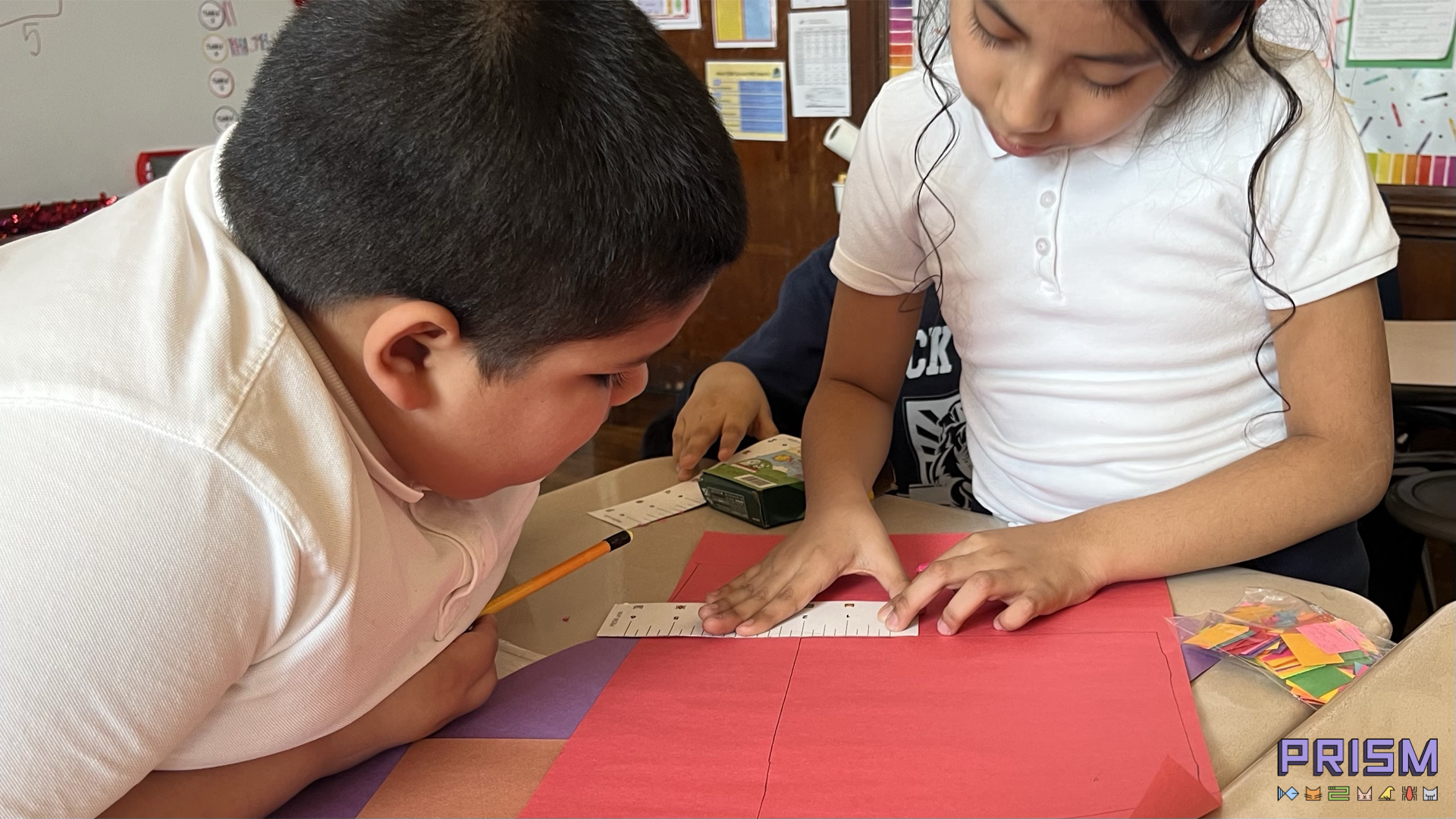
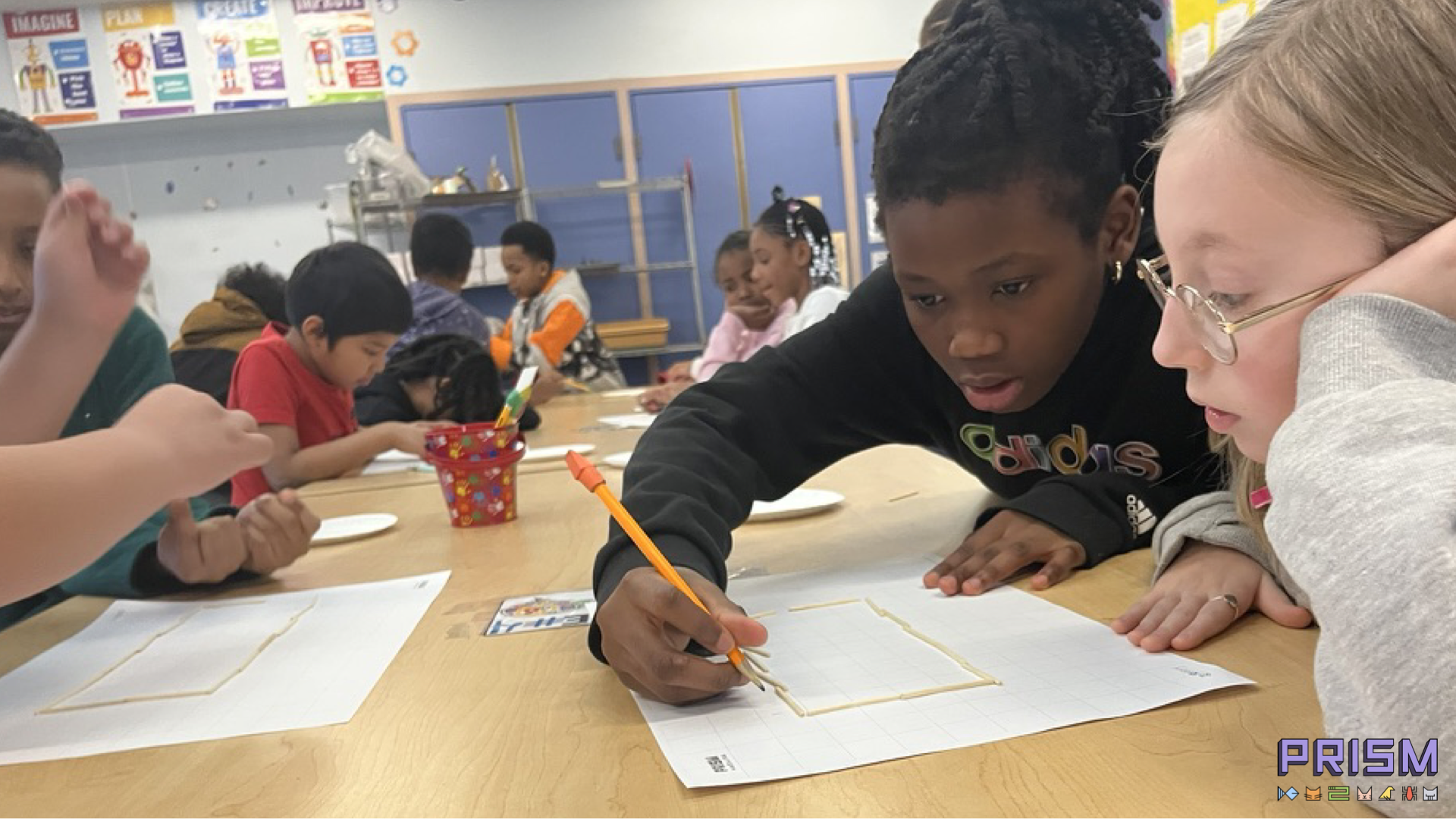
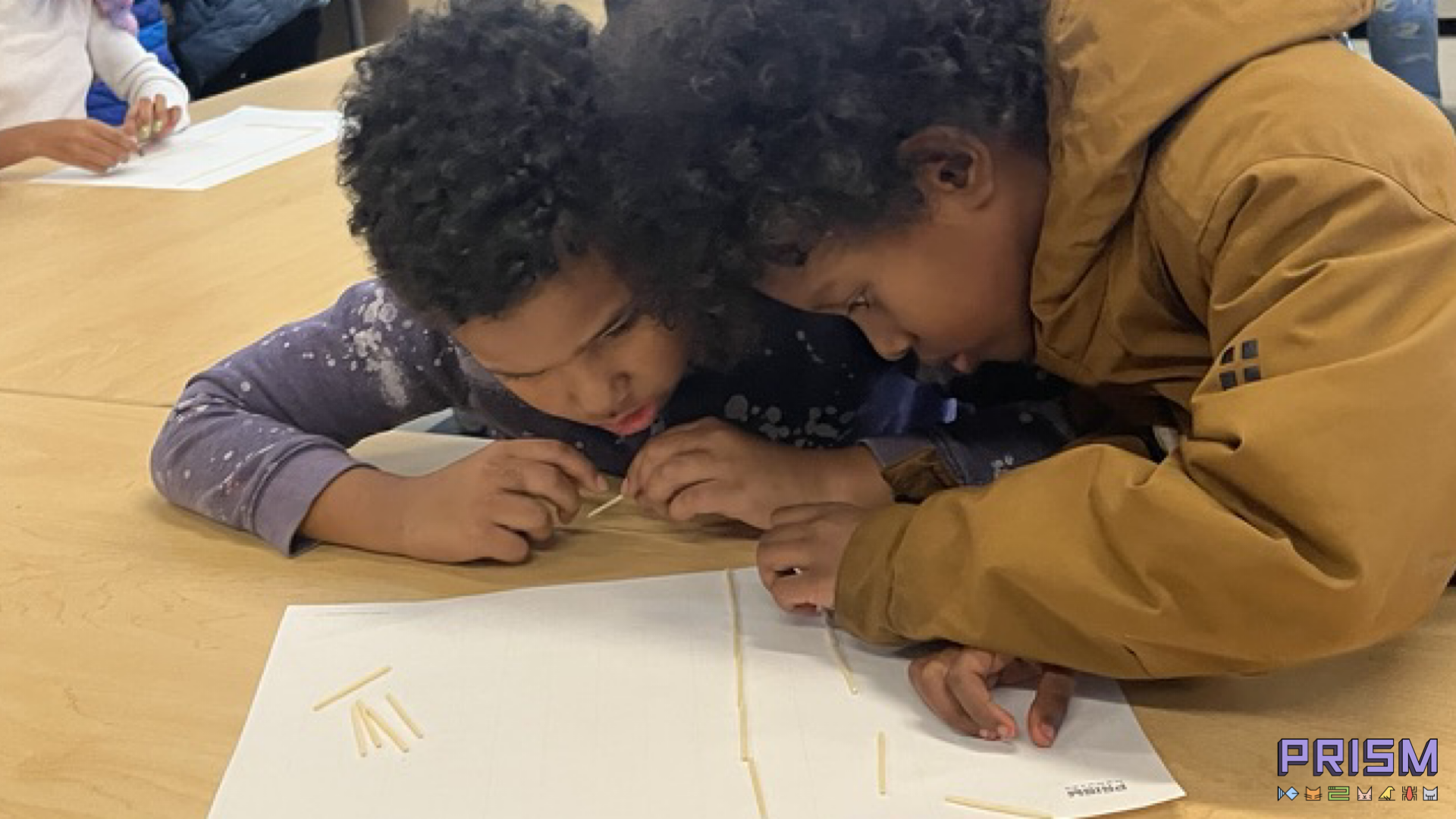
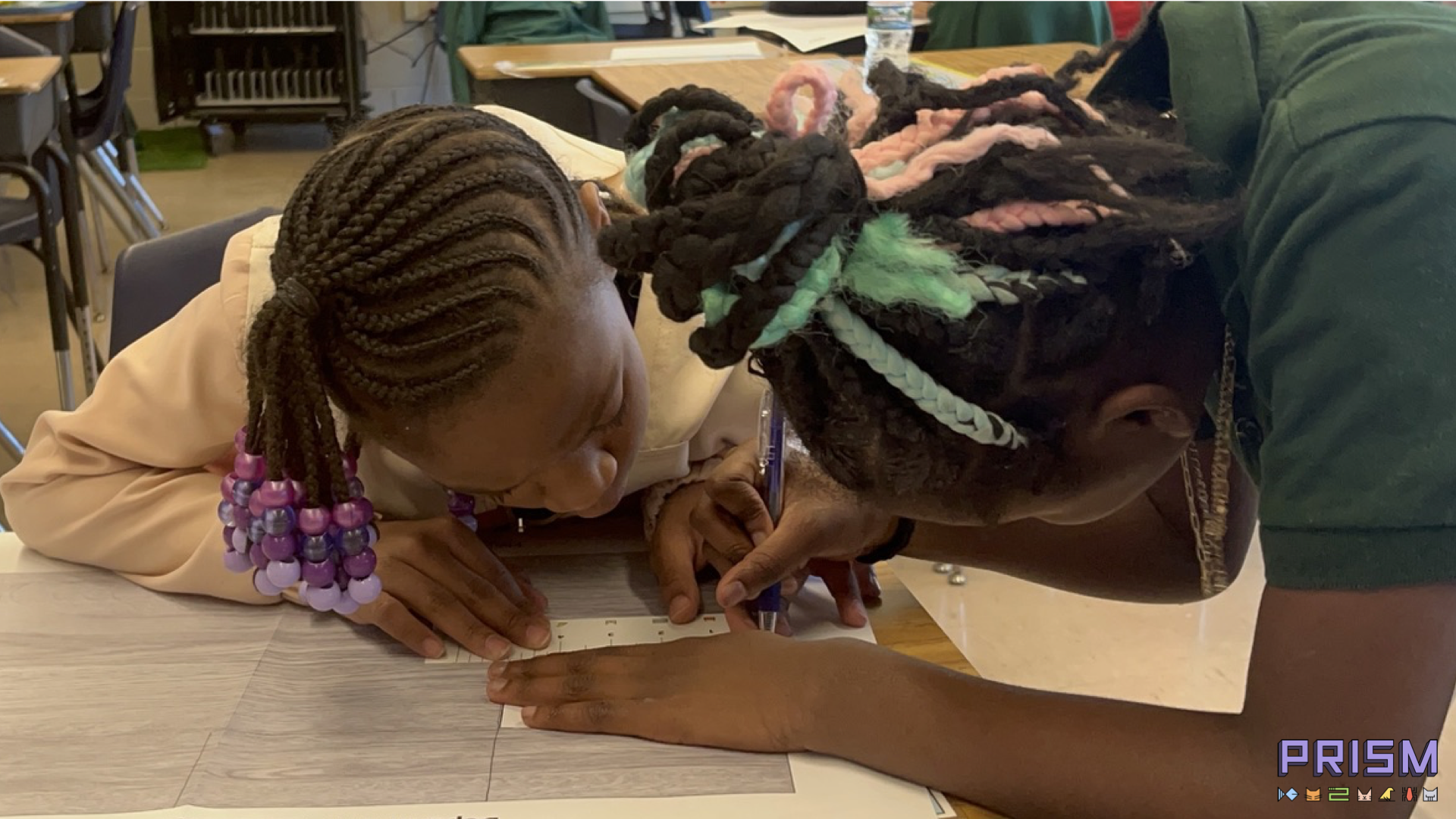
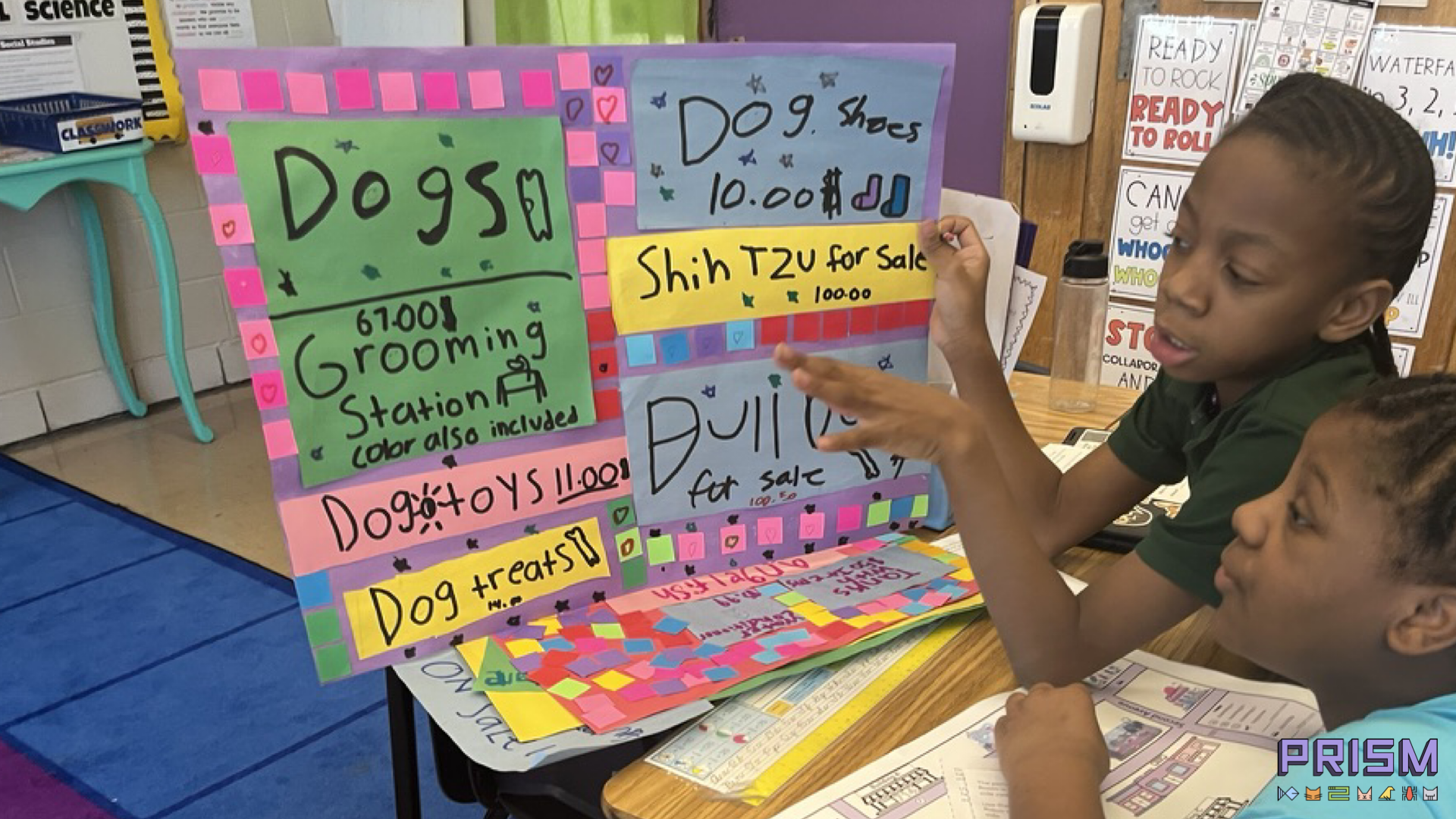
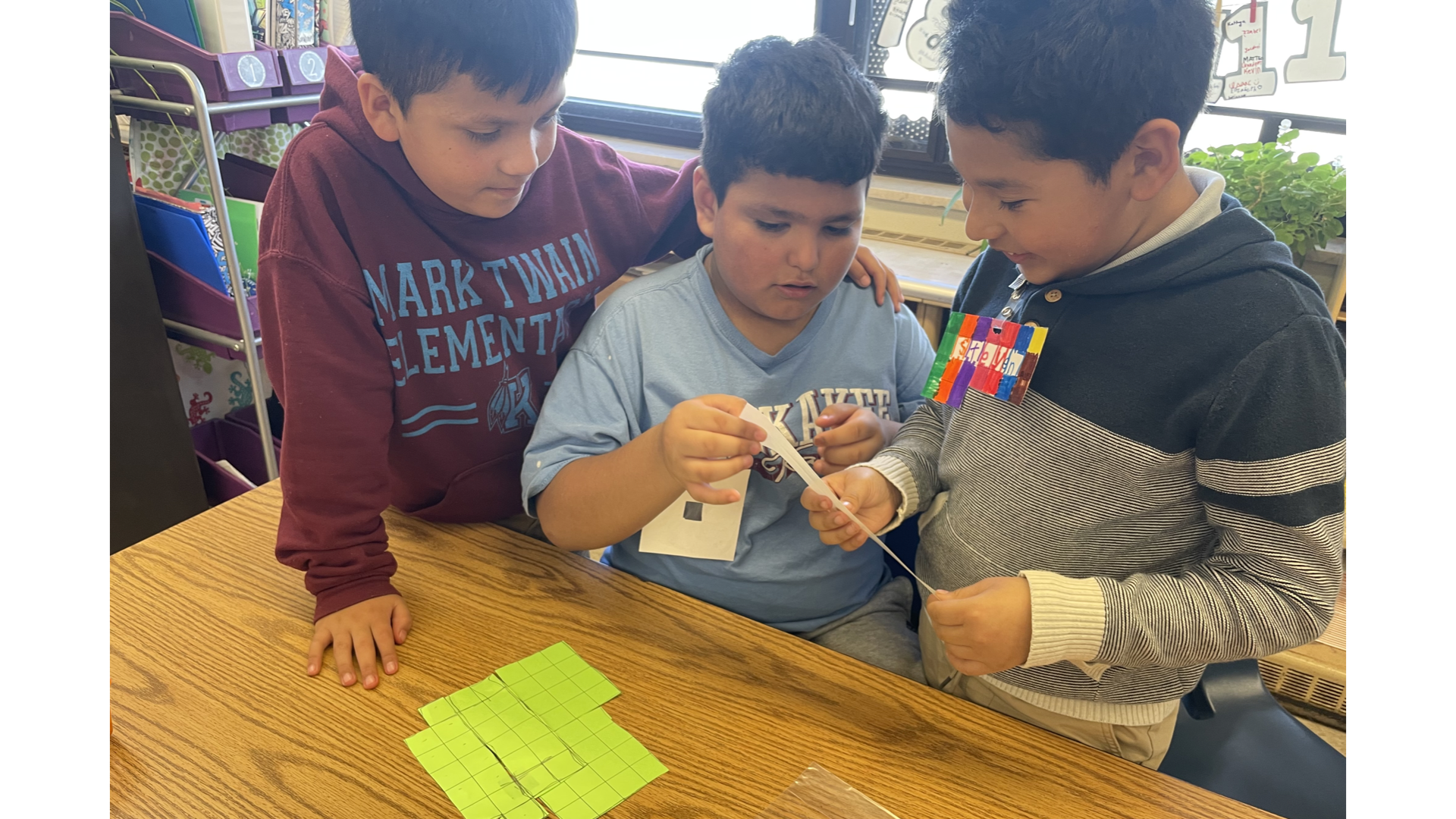
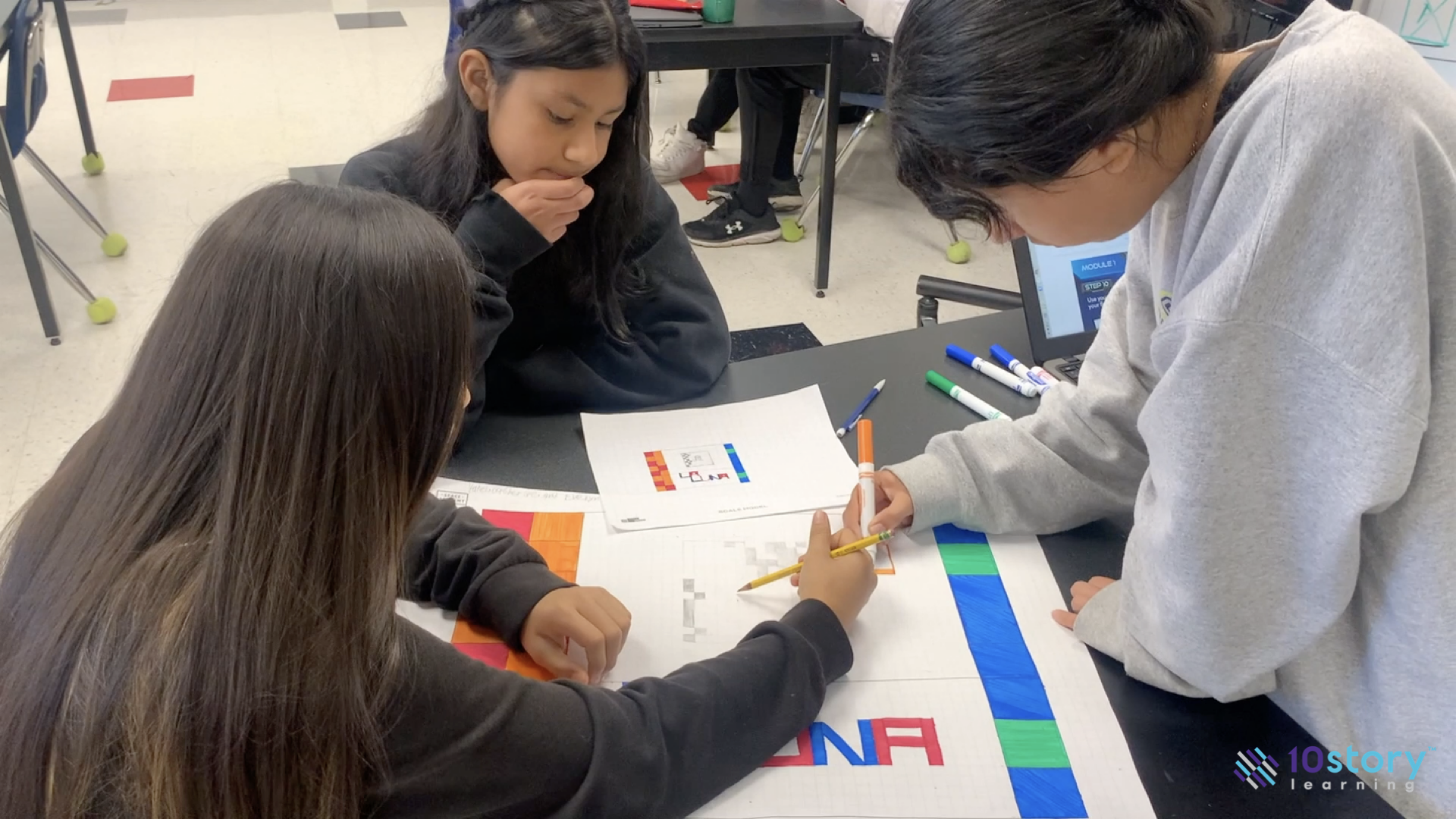
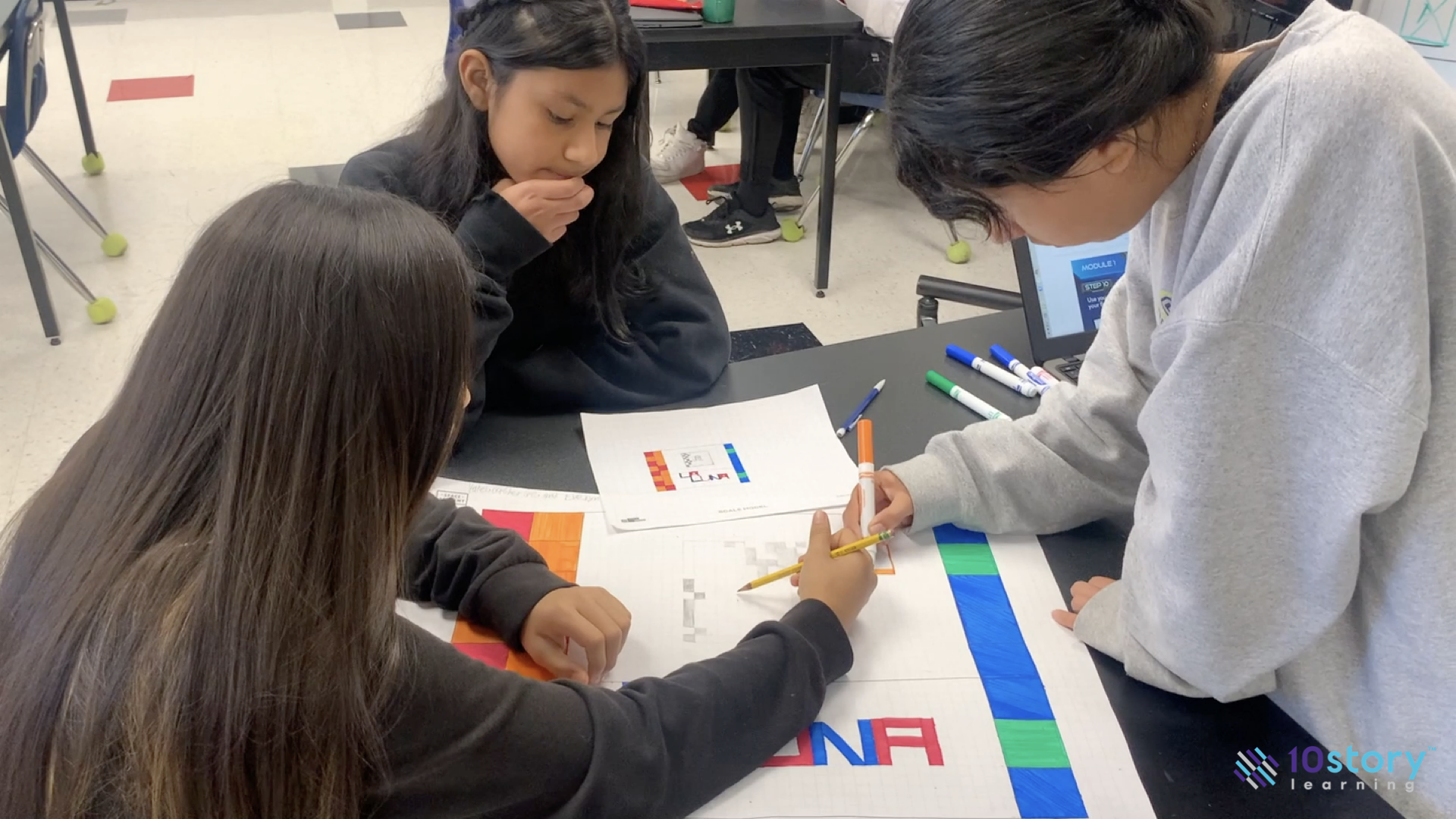
PRISM: Grand Opening is a 10-session, hands-on Math Lab where students become new team members at PRISM Pet Supply, preparing for the grand opening of a new store in Petville. Students design blueprints, build display tables, create a parking lot, design store signs, and more — all while learning perimeter, area, and multiplication using physical materials.
The Story
Students are told that PRISM is opening a new store and their class has been hired to design it. Each team takes a department. They progress from measurement fundamentals through design challenges to a culminating Grand Opening event. Students aren’t just “doing math” — they’re building something.
How It Runs
The teacher follows a web-based slide interface at algebrastudio.org. Short videos from Howie, the on-screen instructor, introduce each concept and model the activity. Materials come pre-sorted in labeled bags by session. No special training or math expertise required.
10 Sessions
Each session runs 60–90 minutes. The full curriculum spans 15–20 hours. Sessions can be scheduled at any pace — twice a week over 5 weeks, daily over 2 weeks, or once a week over 10 weeks.
Sample Lesson
Howie introduces each concept and models the activity through short embedded videos. Students watch, then apply at their tables with physical materials.
What’s in the Kit
All materials are consumable — students keep their work. Kits come pre-sorted in labeled bags by session.
Core Materials
Consumables & Extras
Standards Alignment
PRISM covers perimeter, area, and multiplication standards that are already in your scope.
| # | What Students Do | CCSS | TEKS | Florida |
|---|---|---|---|---|
| 1 | ID cards & floor plan — area by tiling | 3.MD.5, 3.MD.7 | 2.9F, 3.6D | 3.GR.2.1, 3.GR.2.4 |
| 2 | Choosing a location — measure length | 2.MD.A.1, 3.MD.B.3 | 2.9D, 3.6D | 2.M.1.1, 3.DP.1.1 |
| 3 | Pet play zones — concrete models for area | 3.OA.1, 3.MD.5 | 2.9F, 3.4G | 3.GR.2.1, 3.NSO.2.4 |
| 4 | Parking lot — perimeter; area models | 3.MD.8, 3.MD.7 | 3.6B, 2.9F | 2.GR.2.1, 3.GR.2.1 |
| 5 | Stocking shelves — area; multiplication | 3.MD.5, 3.MD.7 | 2.9F, 3.6C | 3.GR.2.1, 3.GR.2.4 |
| 6 | Display tables — combine objects in arrays | 3.OA.A.3 | 3.4D | 2.AR.3.2, 3.NSO.2.2 |
| 7 | Aquarium castle — add/subtract; multiplication | 3.NBT.2, 3.OA.7 | 2.4A, 3.4G | 3.NSO.2, 3.NSO.4 |
| 8 | Store signs — perimeter; area; multiplication | 3.MD.5-8 | 2.9F, 3.6B-D | 2.GR.2.1, 3.GR.2.1-4 |
| 9 | Commercial — add/subtract; multiplication | 3.NBT.2, 3.OA.7 | 2.4A, 3.4G | 3.NSO.2, 3.NSO.4 |
| 10 | Missing dogs — perimeter; area; multiplication | 3.MD.5-8 | 2.9F, 3.6B-D | 2.GR.2.1, 3.GR.2.1-4 |
Kit Sizes & Pricing
All materials included. No additional purchases needed. Refill packs available for repeat use.
Starter Kit
Two departments get the full PRISM experience.
- 2 department material packs
- Petville maps, rulers, blocks
- Teaching portal access
4-Team Kit
Sweet spot for classrooms and afterschool programs.
- 4 department material packs
- Full shared materials
- All posters and teacher materials
- Teaching portal access
Grand Opening Kit
Full class. All seven departments for maximum collaboration.
- 7 department material packs
- Complete material set
- All posters and teacher materials
- Mini stuffed dogs (pk/30)
All materials consumable — students keep their work. Refill packs available for repeat use. Cost per student at 4-Team level: $34/student for 15–20 hours.
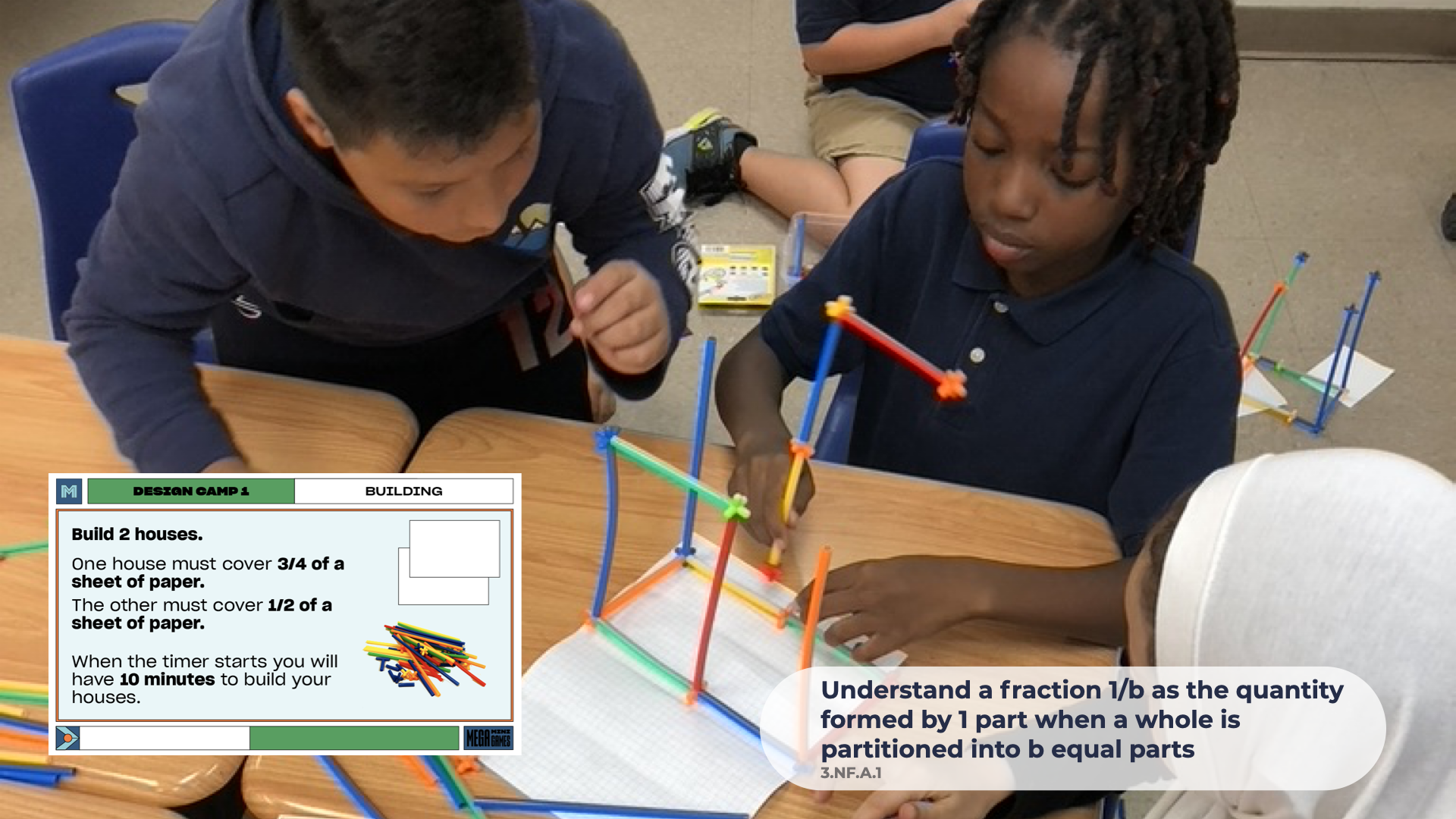


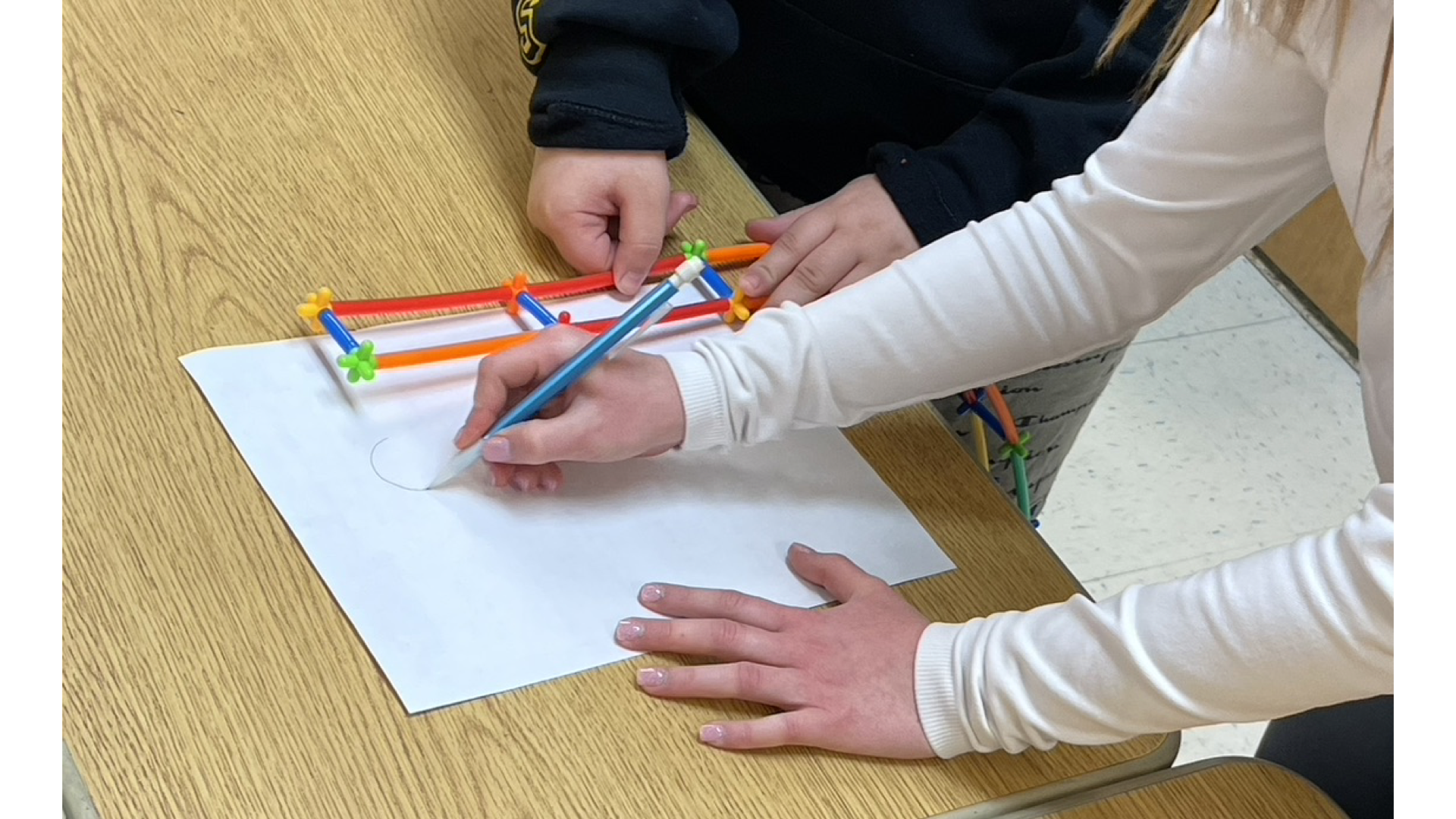
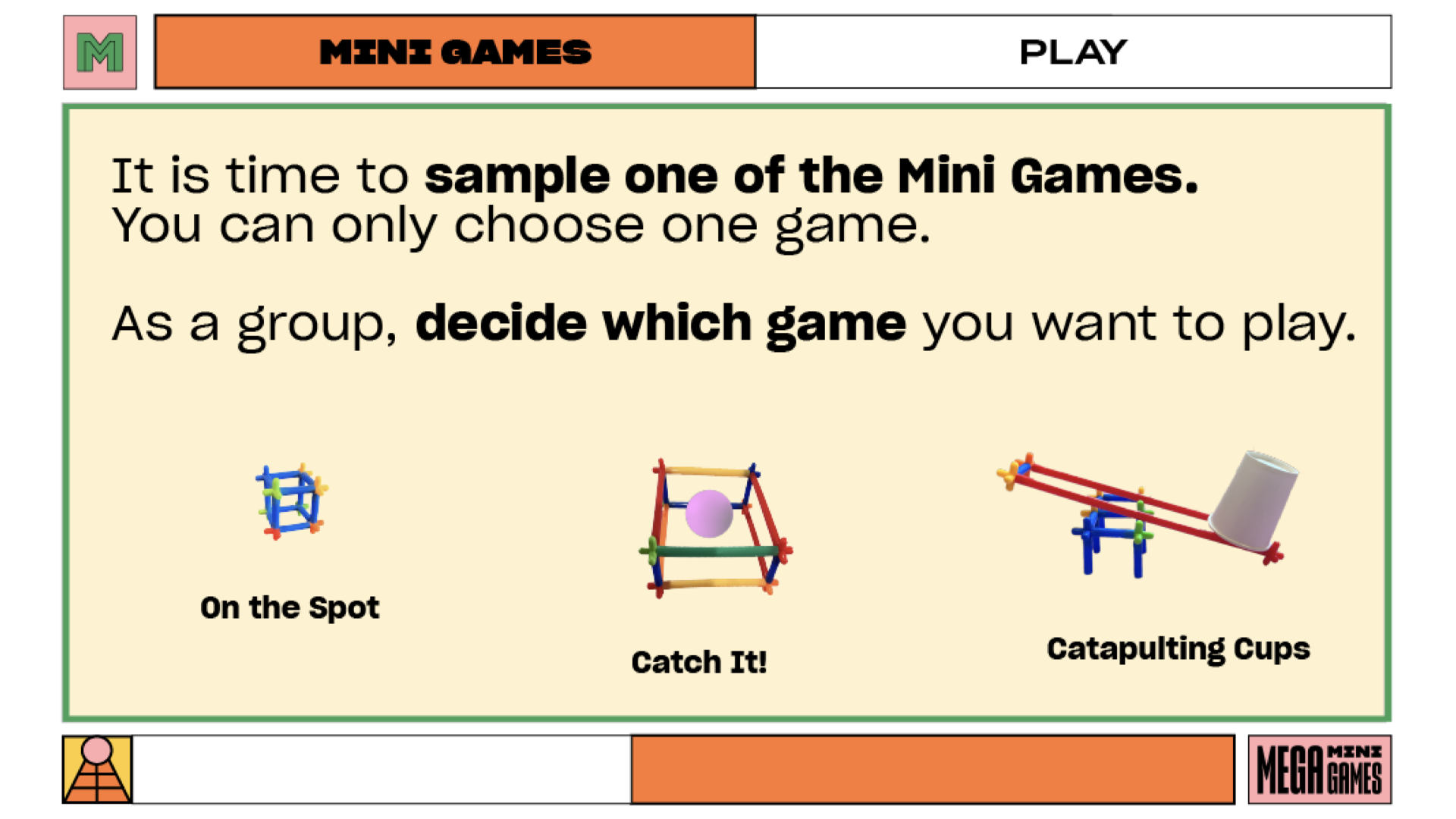
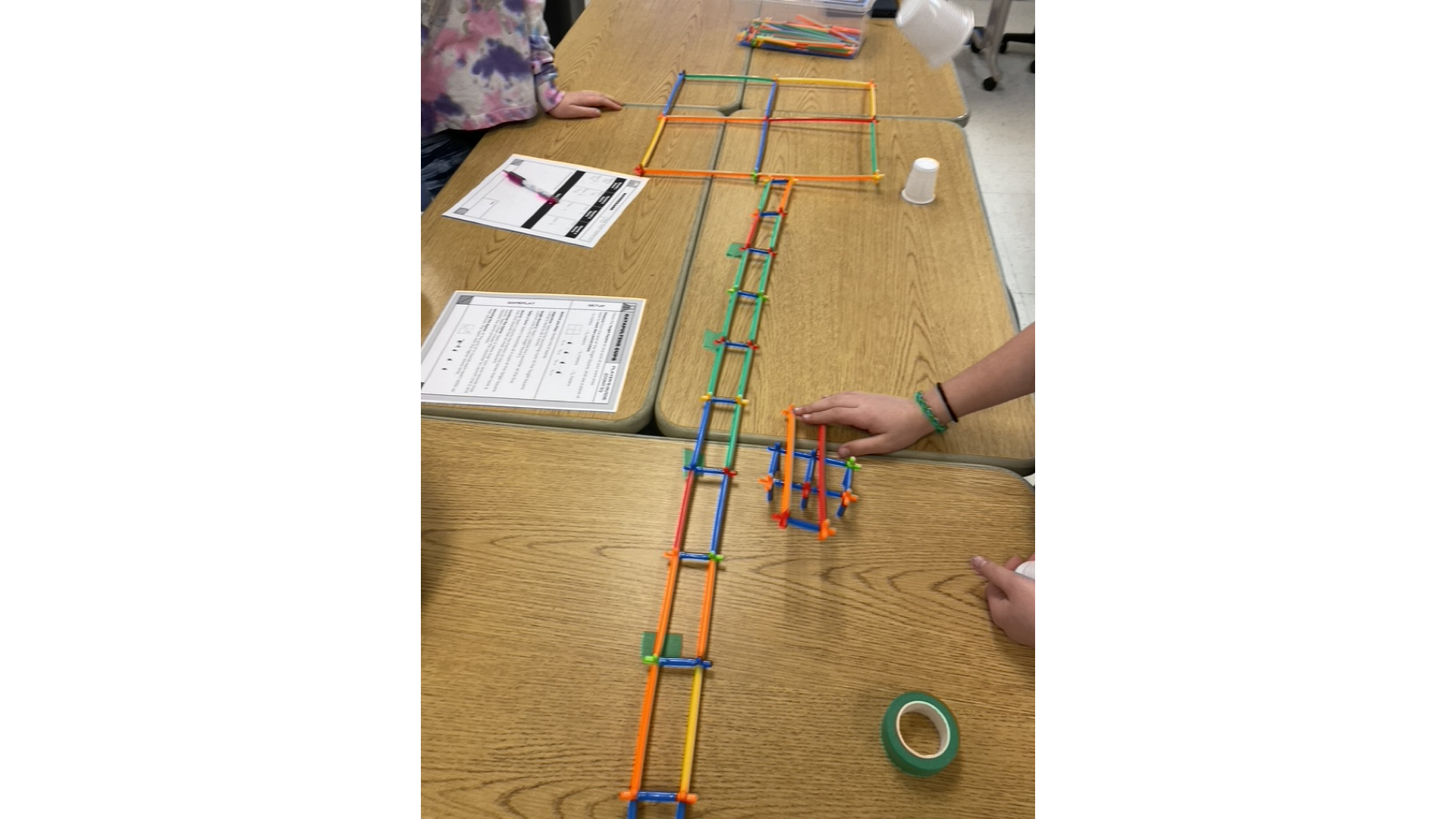
Mega Mini Games
Grades 4–6 · Two Labs · 10 Sessions Each · 15–20 Hours Per Lab
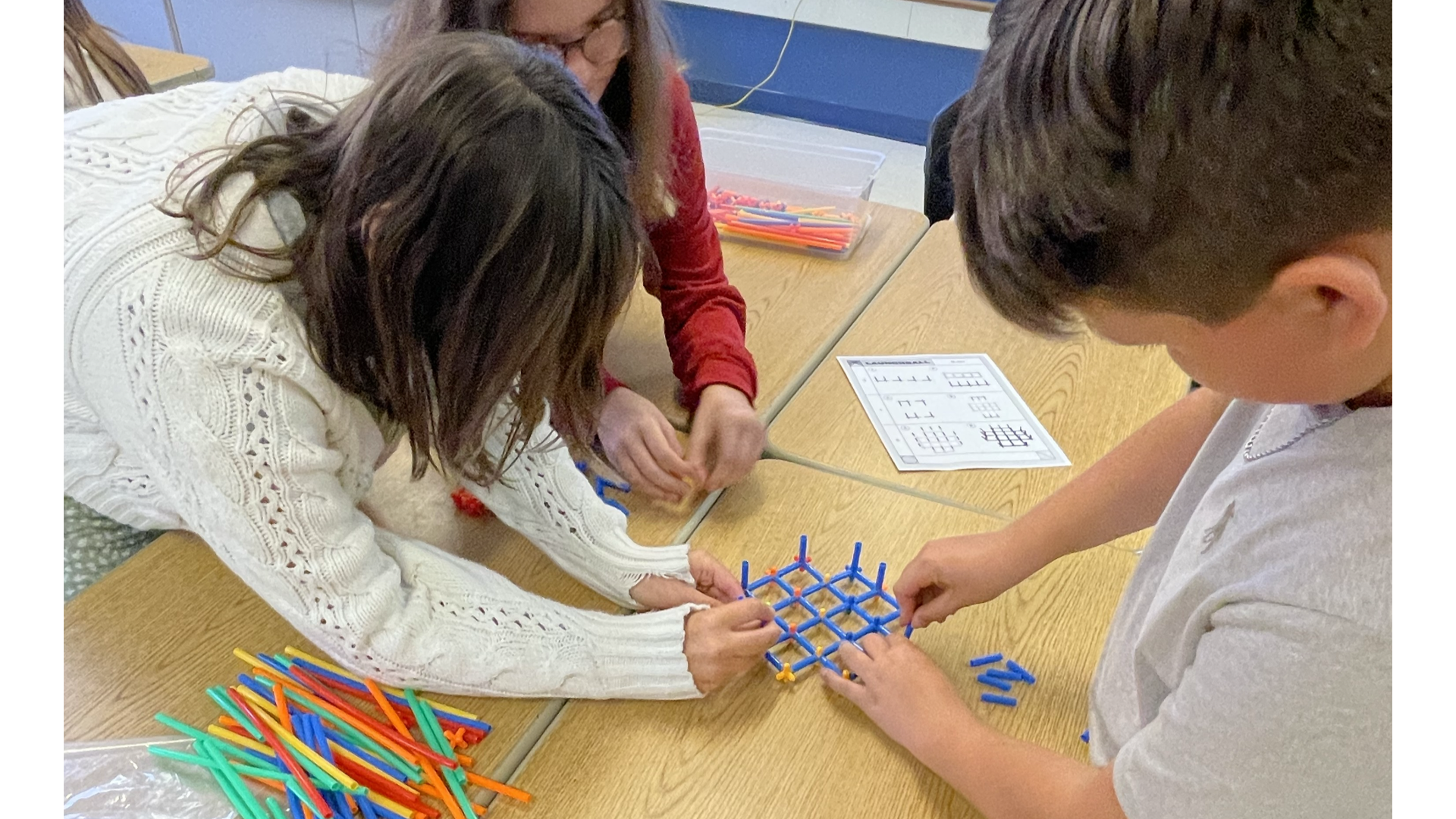
Mega Mini Games is a pair of fraction-focused Math Labs where students play oversized physical fraction games, then design and build their own original games. Each lab runs 10 sessions (15–20 hours). The first half teaches fraction concepts through structured games with professional-quality game boards. The second half flips the script — students become game designers, creating, testing, and refining their own fraction games. Each lab culminates in a Game Expo where students present and play each other’s games.
The Story
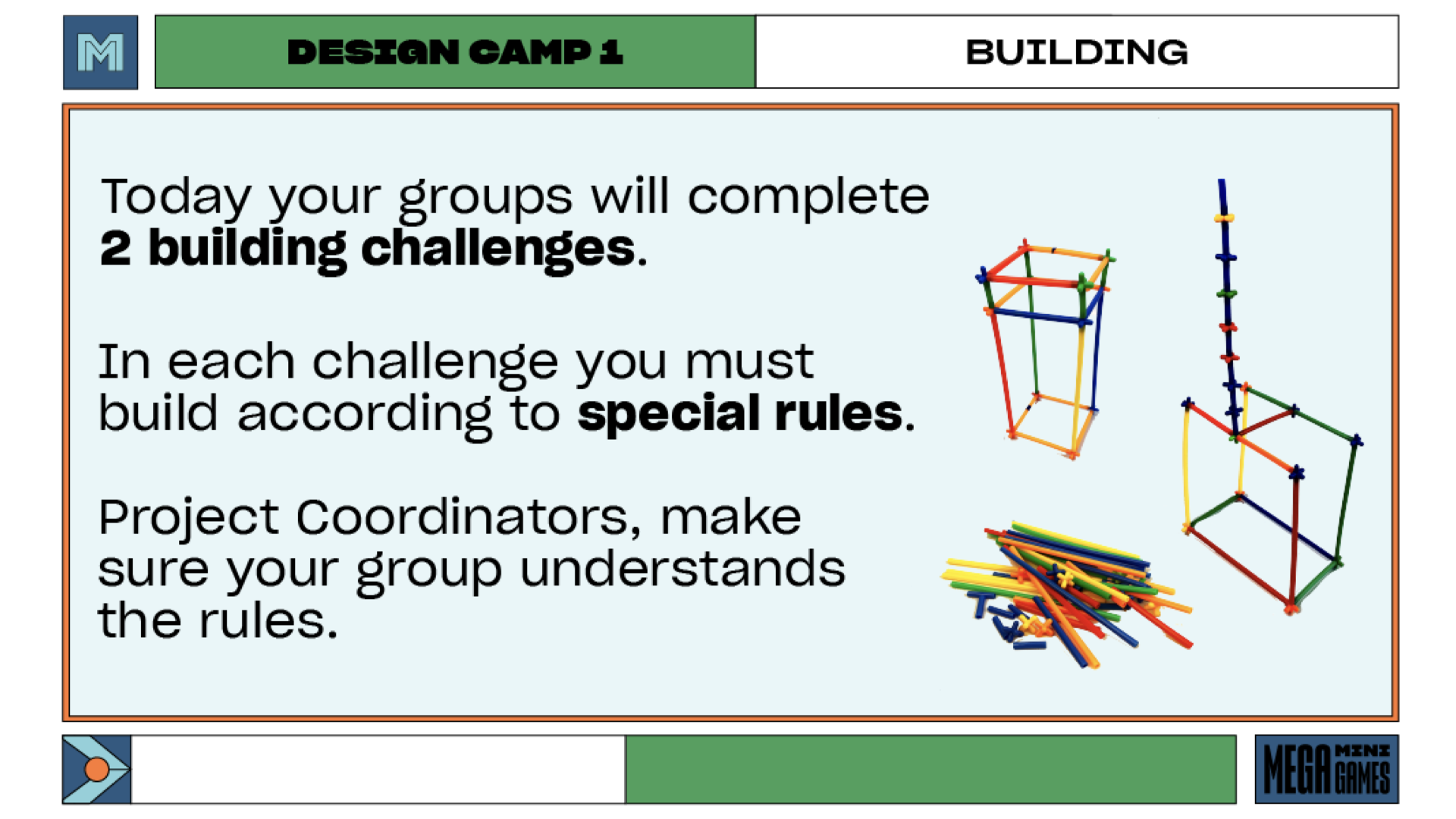
Students are hired as “Design Campers” at Mega Mini Games, a fictional game company. In Design Game X, they play the company’s existing games (Line Up, Launchball, Finish Line), then design their own original fraction game. In The Next Big Game, returning campers play more advanced games (Rollerslide, Collision, Apex) with oversized professional game boards, then design a more complex game. Both labs end with a Game Expo — many schools turn this into a family night or math festival.
How It Runs
Same model as PRISM. Every session runs through a web-based slide interface at algebrastudio.org with embedded teaching videos from Howie. Materials come pre-sorted. No special training required. The two labs can run independently or in sequence.
Design Game X — 10 Sessions
Grade 4 · Intro Fractions · 15–20 hours
Sessions 1–5: Play structured fraction games. Sessions 6–10: Design, build, and present original games.
The Next Big Game — 10 Sessions
Grade 5 · Fraction Operations · 15–20 hours
Sessions 1–5: Play advanced fraction games with oversized boards. Sessions 6–10: Design and build a more complex original game.
The Arc
Both labs follow the same two-phase structure. Phase 1 (sessions 1–5): Students play structured games that teach specific fraction concepts through physical gameplay with oversized, professional-quality boards and pieces. Phase 2 (sessions 6–10): Students become game designers — they create a game world, plan mechanics, build a physical game, and present at the Game Expo. The math is embedded in the design process.
The Game Expo is the culminating event. Many schools open it to families — it works as a math night, STEM showcase, or afterschool celebration.
Sample Lesson
Howie introduces each game and models how it works. Students watch, then play at their tables with physical game boards and pieces.
What’s in the Kit
The standout materials are the oversized professional game boards — these are the pieces students remember. Game boards and pieces are durable (reusable year after year). Game-building materials are consumable and available as refill packs.
Design Game X
The Next Big Game
Standards Alignment
Mega Mini Games covers the fraction standards already in your grades 4–5 scope. Design Game X covers introductory fraction concepts; The Next Big Game covers fraction operations.
Design Game X
| Session | What Students Do | CCSS | TEKS | Florida |
|---|---|---|---|---|
| 1 | Build houses & towers — fractions as parts of a set & whole | 3.NF.A.1 | 3.3A | 3.FR.1.1 |
| 2 | Play Line Up — compare & order fractions | 4.NF.A.2 | 4.3G | 4.FR.2.3 |
| 3 | Play Launchball — add fractions with unlike denominators | 4.NF.B.3.C, 5.NF.A.1 | 4.3E, 5.3K | 4.FR.2.1, 5.FR.2.1 |
| 4 | Play Finish Line — fractions on number line; multiply by whole numbers | 3.NF.A.2, 5.NF.B.4 | 3.3B, 5.3L | 3.FR.1.2, 5.FR.2.3 |
| 5–9 | Design, build & test original fraction games | Fraction skills applied in game design context | ||
| 10 | Game Expo | 4.NF.A.2 | 4.3G | 4.FR.2.3 |
The Next Big Game
| Session | What Students Do | CCSS | TEKS | Florida |
|---|---|---|---|---|
| 1 | Make & use a meter stick — fractions on number line | 3.NF.A.2, 3.MD.B.4 | 3.3B, 3.7C | 3.FR.1.2, 3.M.2.2 |
| 2 | Play mini games — fraction warm-ups | Review and practice | ||
| 3 | Play Rollerslide — add & subtract mixed numbers | 5.NF.A.1 | 5.3K | 5.FR.2.1 |
| 4 | Play Collision — multiply fractions by whole numbers | 5.NF.B.4 | 5.3L | 5.FR.2.3 |
| 5 | Play Apex — divide fractions | 5.NF.B.7 | 5.3N | 5.FR.2.5 |
| 6 | Design training — fractions as joining & separating parts | 4.NF.B.3 | 4.3E | 4.FR.2.1 |
| 7–8 | Plan & build original fraction games | Fraction operations applied in design context | ||
| 9–10 | Scorecard & Game Expo — all fraction operations | 5.NF.A.1, 5.NF.B.4, 5.NF.B.7 | 5.3K, 5.3L, 5.3N | 5.FR.2.1, 5.FR.2.3, 5.FR.2.5 |
Kit Sizes & Pricing
Each lab is sold separately. Each team is 4 students. Game boards and pieces are durable (reusable year after year); only consumable game-building materials need refilling.
Design Game X — Grade 4
Starter Kit
- 2 complete game board sets
- 2 Game X design kits
- All shared posters & teacher materials
- Teaching portal access
4-Team Kit
- 4 complete game board sets
- 4 Game X design kits
- Full building material supply
- Teaching portal access
Full Kit
- 7 complete game board sets
- 7 Game X design kits with bins
- Full supply of all materials
- Teaching portal access
The Next Big Game — Grade 5
Starter Kit
- 2 Rollerslide, 2 Collision, 2 Apex boards
- Hot Wheels tracks & game pieces
- All shared posters & teacher materials
- Teaching portal access
4-Team Kit
- 4 of each game board
- Full game piece sets (marbles, pucks, bean bags)
- Craft materials & connector straws
- Teaching portal access
Full Kit
- 7 of each game board
- Full game piece library
- 7 design kits with bins
- Full supply of all materials
Cost per student at 4-Team level: $47/student for 15–20 hours. Year 2+ only needs consumable refill packs — game boards carry over.
Space Academy
Grades 5–8 · Two Labs · 10 Sessions Each · 15–20 Hours Per Lab
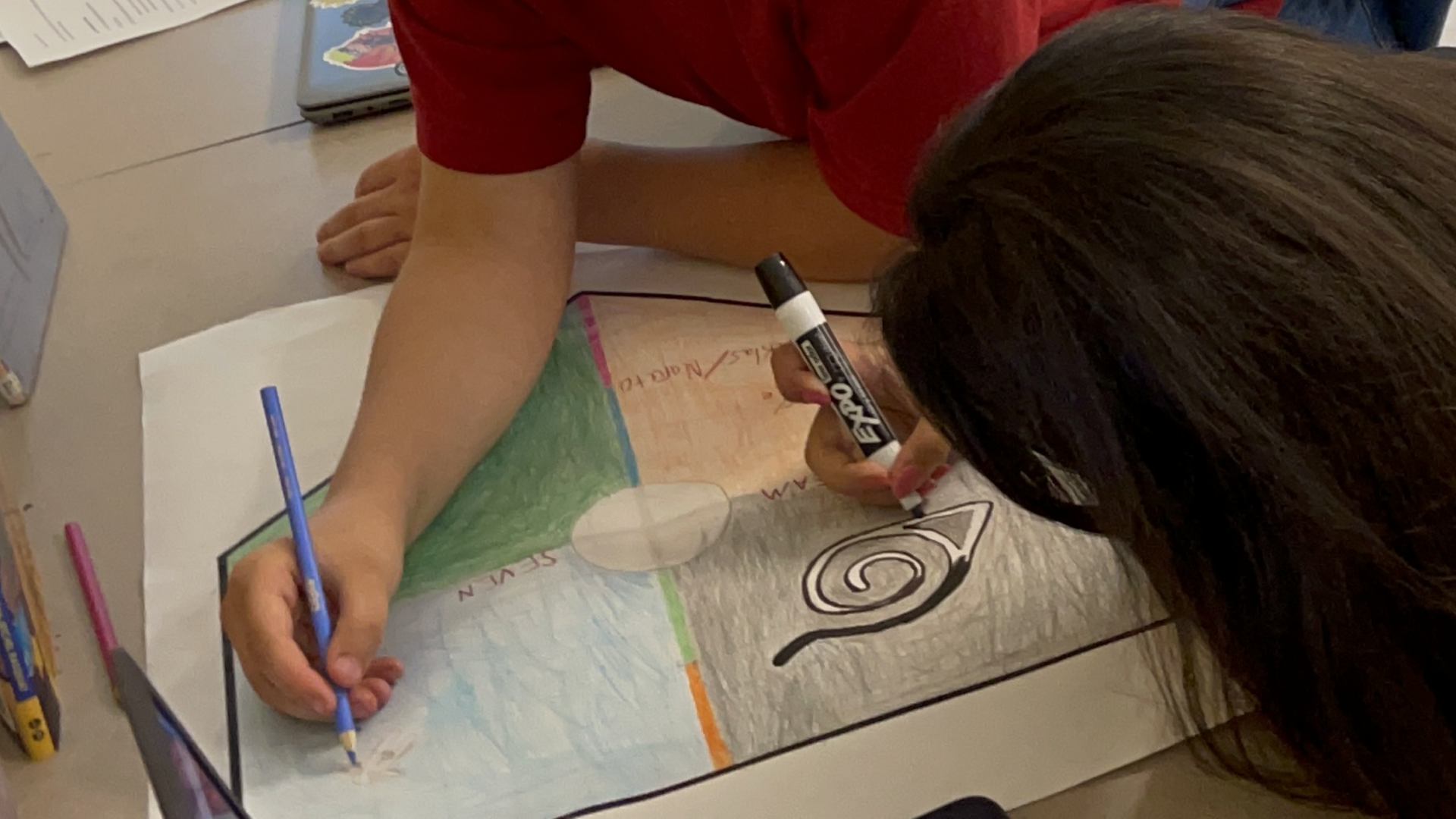
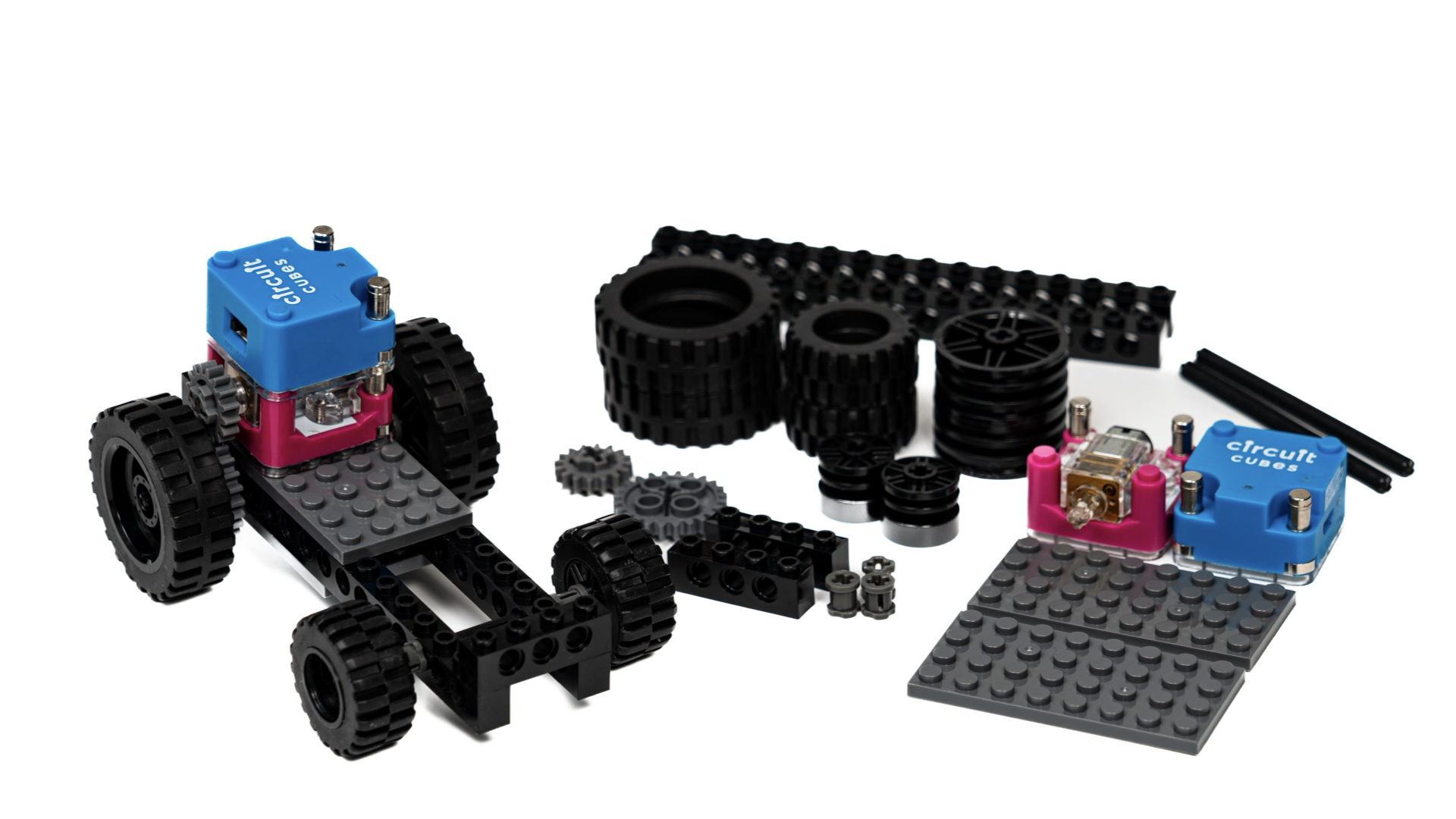
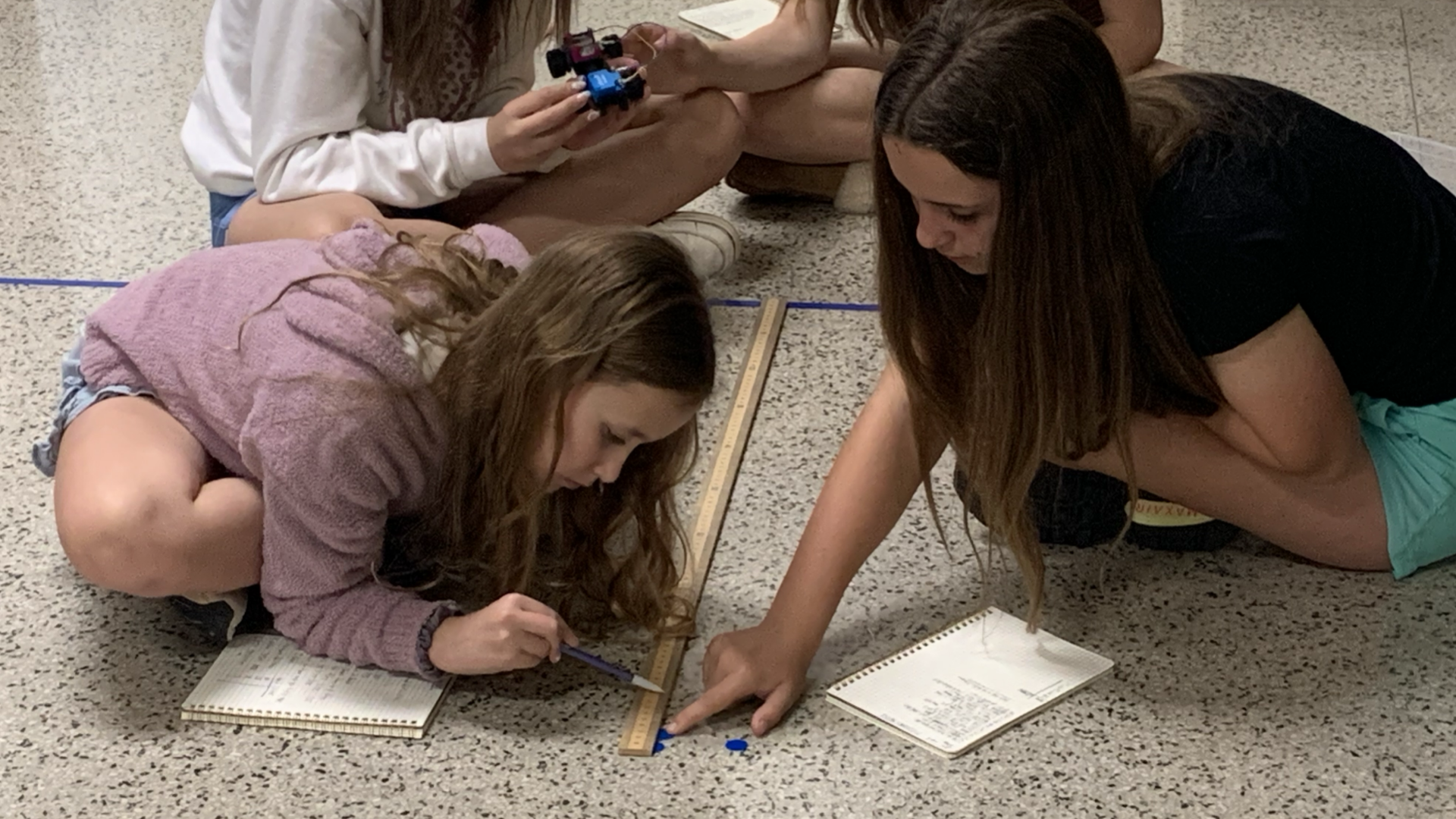
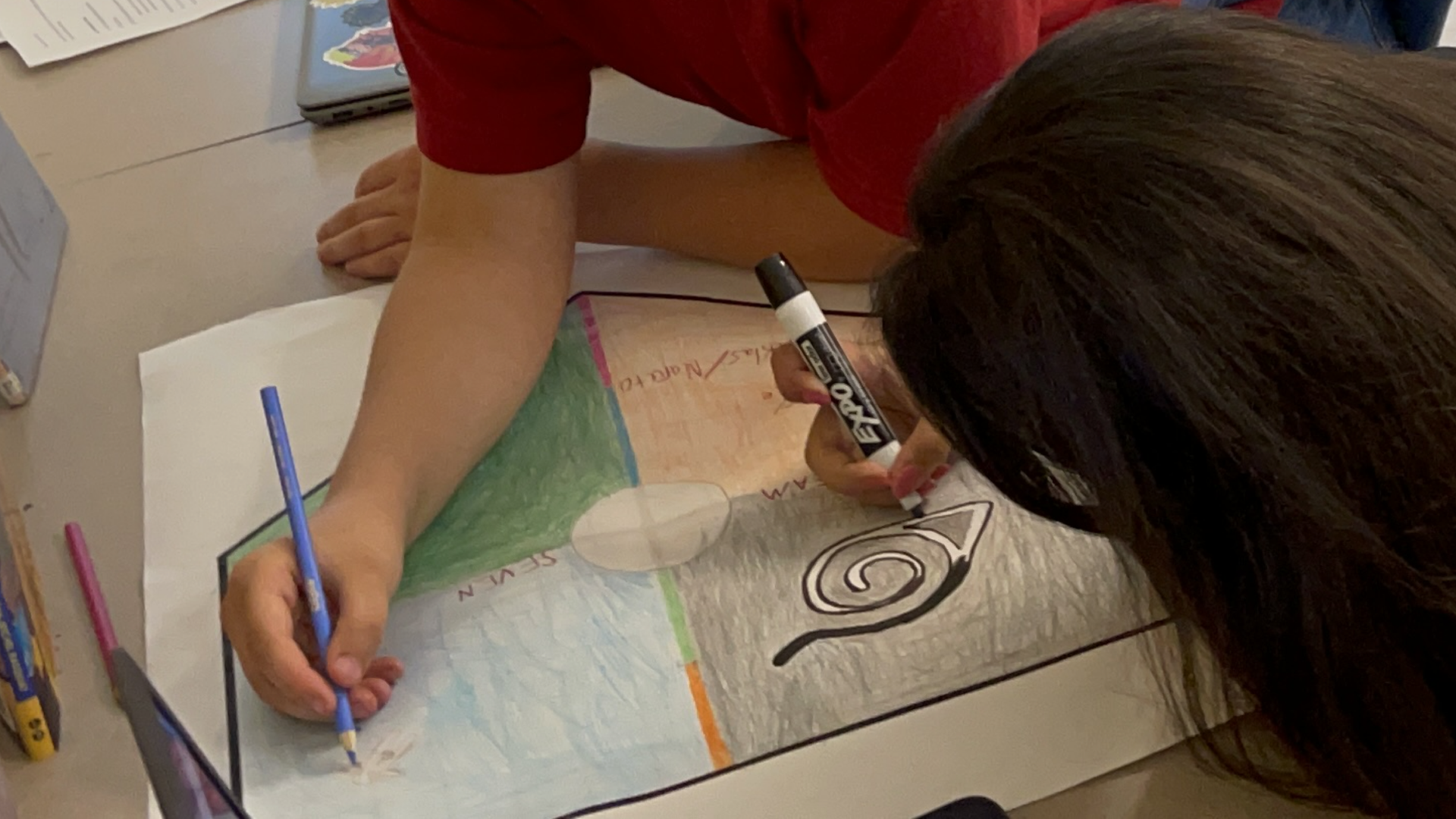
Space Academy is a pair of story-driven Math Labs where students work as cadets on an interstellar rescue mission. The standout element: students build a motorized racer (the Exoplanet Exploration Vehicle, or E.E.V.), collect real distance and time data, and use that data to plan a rescue. Math concepts are embedded in the mission — students need coordinate geometry, graphing, rate, and ratio to succeed.
The Story
In Finding P.I.P.E.R., cadets must rescue a robot stranded on Proxima Centauri b. They design crew badges using the coordinate plane, build an E.E.V. (motorized racer), collect data on its movement, create graphs to predict its path, decipher a security code using polygon classification, and execute a dramatic planetary evacuation. In Journey to Titan, cadets return for a new mission using ratio, unit rate, percent, and scale drawings to navigate a rescue on Saturn’s moon.
How It Runs
Same model as all Algebra Studio labs. Every session runs through a web-based slide interface at algebrastudio.org with embedded teaching videos from Howie. Materials come pre-sorted. No special training required. The two labs can run independently or in sequence.
Finding P.I.P.E.R. — 10 Sessions
Grade 5 · Coordinate Geometry & Graphing · 15–20 hours
Students build a motorized racer in Session 3, then use real data from it throughout the remaining missions.
Journey to Titan — 10 Sessions
Grade 6 · Ratio, Rate & Percent · 15–20 hours
Both labs are story-driven rescue missions. The motorized racer generates real data that students use for every subsequent session.
Sample Lesson
Howie introduces each mission through embedded videos. Students watch, then carry out the mission at their tables with physical materials and their motorized racer.
What’s in the Kit
The standout material is the motorized racer kit (E.E.V.) — students build a real vehicle that moves and generates data. Racer components are durable (reusable year after year). Mission-specific consumable materials available as refill packs.
Finding P.I.P.E.R.
Journey to Titan
Standards Alignment
Finding P.I.P.E.R. covers 5th-grade coordinate geometry and data standards. Journey to Titan covers 6th/7th-grade ratio, rate, and percent.
Finding P.I.P.E.R.
| Session | What Students Do | CCSS | TEKS | Florida |
|---|---|---|---|---|
| 1 | Crew badge — work in the coordinate plane | 5.G.A.1 | 5.8A, 5.8B | 5.GR.2.1 |
| 2 | Locate P.I.P.E.R. — ordered pairs & problem-solving | 5.G.A.1, 5.G.A.2 | 5.8A, 5.8B | 5.GR.2.1 |
| 3 | Build an E.E.V. (motorized racer) | Engineering & construction session | ||
| 4 | Predict rate — collect data, notice patterns | 5.OA.B.3 | 5.4F | 5.DP.1.1 |
| 5 | Standardized data collection — ratio reasoning | 6.RP.3 | 6.4B | 6.AR.3.3 |
| 6 | Create graphs to make predictions | 5.OA.B.3 | 5.8C | 5.DP.1.1 |
| 7 | Simulate rescue — multiply/divide, place value | 3.NBT.A.3, 5.NBT.A.1 | 5.3A, 5.3B | 3.NSO.2.3, 5.NSO.1.3 |
| 8 | Decipher code — classify 2D shapes | 5.G.B.3, 5.G.B.4 | 5.5A, 5.5B | 5.GR.2.1 |
| 9 | Reactivate transmitter — graph to solve | 5.OA.B.3 | 5.8C | 5.DP.1.1 |
| 10 | Evacuate — patterns & ratio reasoning | 5.OA.B.3, 6.RP.A.3 | 6.4B, 6.4E | 6.AR.3.1, 6.AR.3.2 |
Journey to Titan
| Session | What Students Do | CCSS | TEKS | Florida |
|---|---|---|---|---|
| 1 | Team flag — ratio and scale concepts | 6.RP.A.3, 7.G.A.1 | 6.4B, 6.4E, 7.9A | 6.AR.3.3, 7.GR.1.1 |
| 2 | Build E.E.V. and predict movement | Engineering & construction session | ||
| 3 | Time trials — unit rate; equivalent ratios | 6.RP.A.2, 5.OA.B.3 | 6.4D, 5.4F | 6.AR.3.2, 5.DP.1.1 |
| 4 | Predictions — unit rate from tables & graphs | 7.RP.A.2.B | 7.4B | 7.AR.3.2 |
| 5 | Improve accuracy — calculate percent error | 7.RP.A.1 | 7.4A | 7.AR.3.1 |
| 6 | Changing speeds — percent increase & decrease | 7.RP.A.3 | 7.4C | 7.AR.3.3 |
| 7 | Flight plan — scale drawings | 7.G.A.1 | 7.9A | 7.GR.1.1 |
| 8 | Launch sequence — calculate percentage | 6.RP.A.3.C | 6.5B | 6.NSO.2.3 |
| 9 | Rescue — write & evaluate expressions | 6.EE.2.A | 6.7A | 6.AR.1.1 |
| 10 | Evacuate — solve unit rate problems | 6.RP.A.2 | 6.4B | 6.AR.3.2 |
Kit Sizes & Pricing
Each lab sold separately. Motorized racer components are durable (reusable year after year); only consumable mission materials need refilling.
Finding P.I.P.E.R. — Grade 5
Starter Kit
- 2 motorized racer kits
- Coordinate plane materials
- All mission cards & data sheets
- Teaching portal access
4-Team Kit
- 4 motorized racer kits
- 4 complete mission material sets
- All shared posters & teacher materials
- Teaching portal access
Full Kit
- 7 motorized racer kits
- 7 complete mission material sets
- All shared posters & teacher materials
- Teaching portal access
Journey to Titan — Grade 6
Starter Kit
- 2 motorized racer kits
- Scale drawing & ratio materials
- All mission cards & data sheets
- Teaching portal access
4-Team Kit
- 4 motorized racer kits
- 4 complete mission material sets
- All shared posters & teacher materials
- Teaching portal access
Full Kit
- 7 motorized racer kits
- 7 complete mission material sets
- All shared posters & teacher materials
- Teaching portal access
Cost per student at 4-Team level: $34/student for 15–20 hours. Racer kits carry over — year 2+ only needs consumable refills.
Balance Lab + Slope Lab
Grades 6–9 · 35 Lessons · 40–50 Hours · Sold as a Bundle
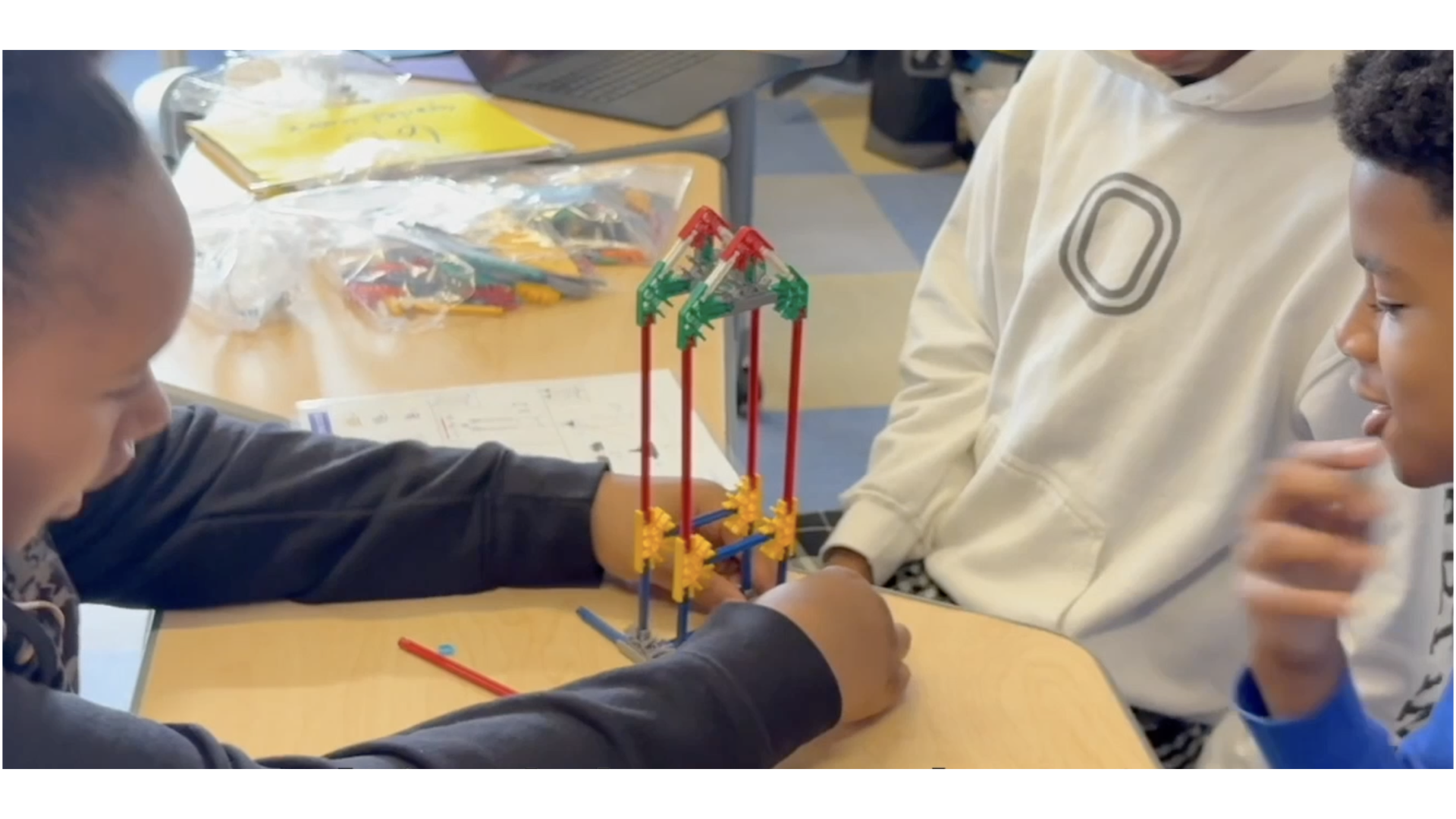
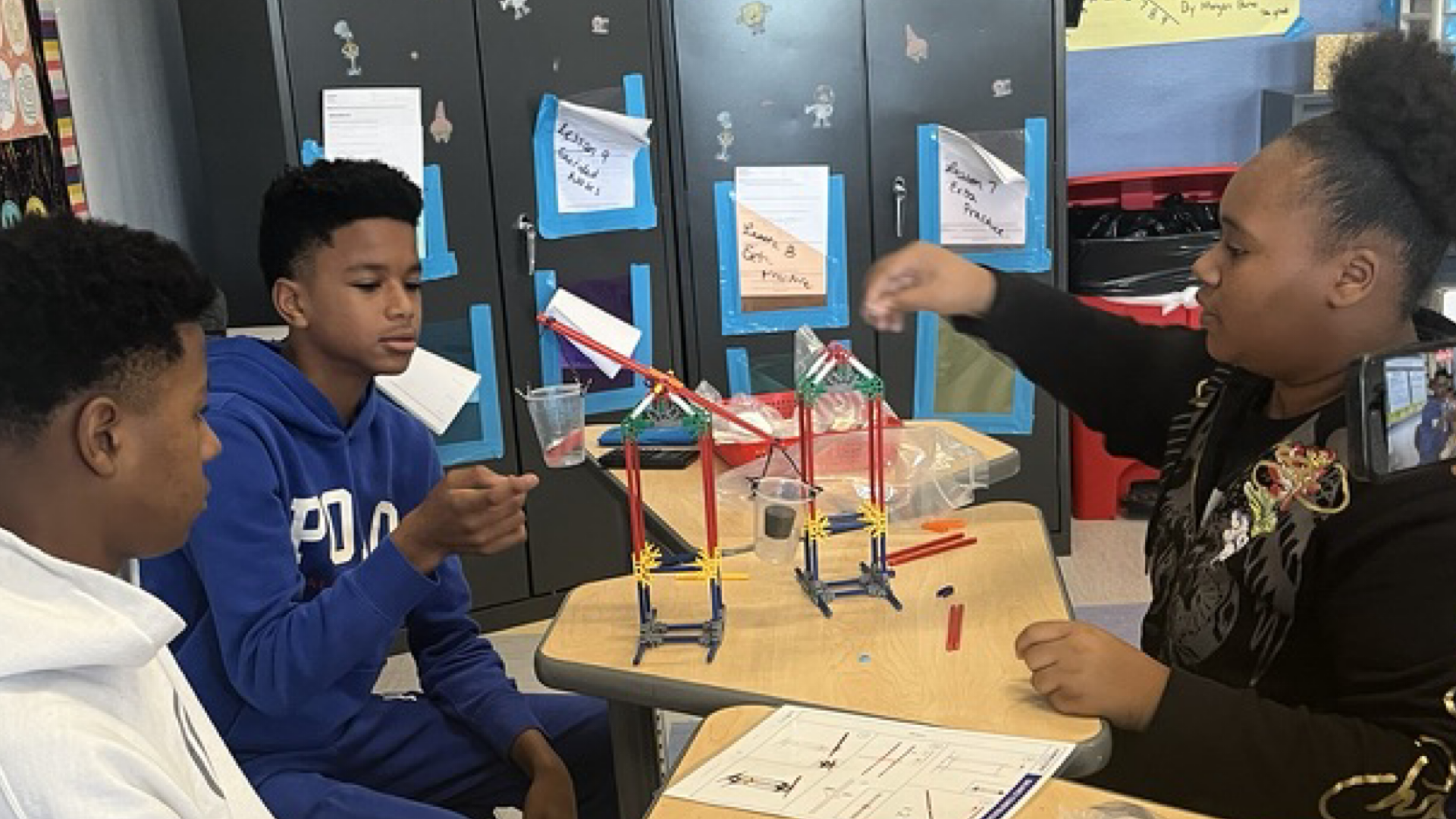
Balance Lab + Slope Lab is a 35-lesson, hands-on algebra sequence that takes students from building a physical balance all the way to graphing linear equations in y = mx + b form. All materials are fully durable — no consumable refill packs needed.
The Progression
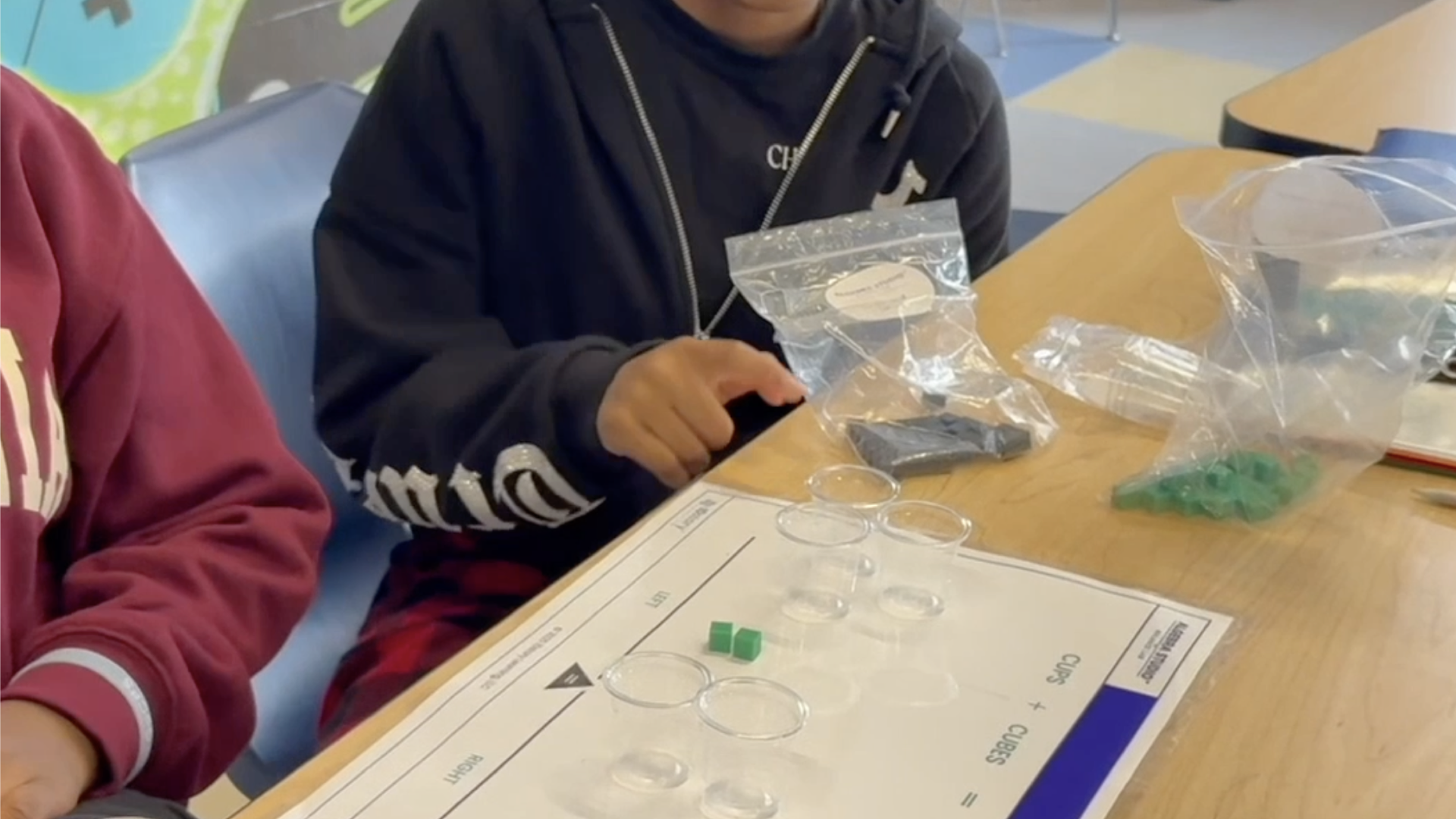
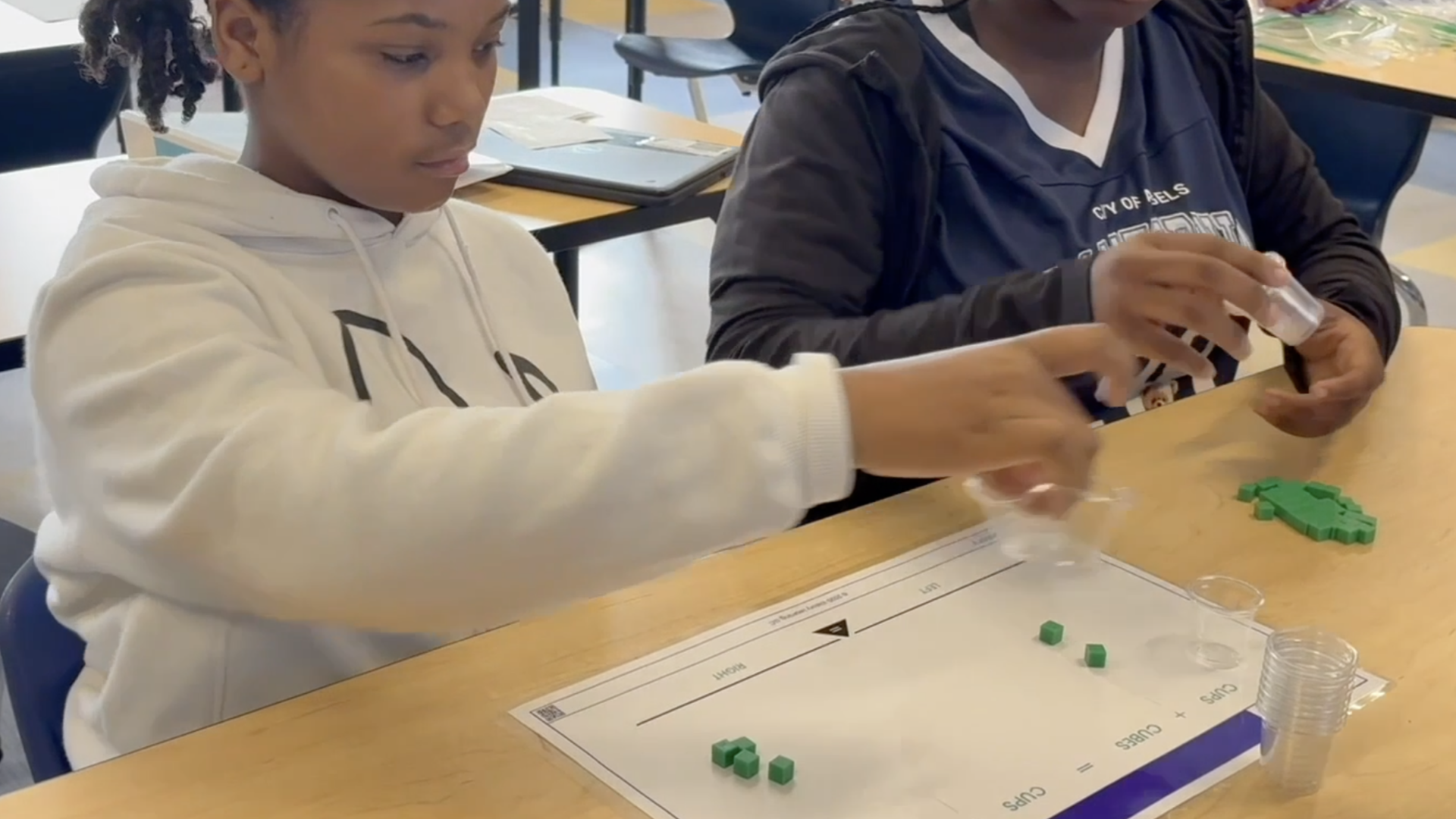
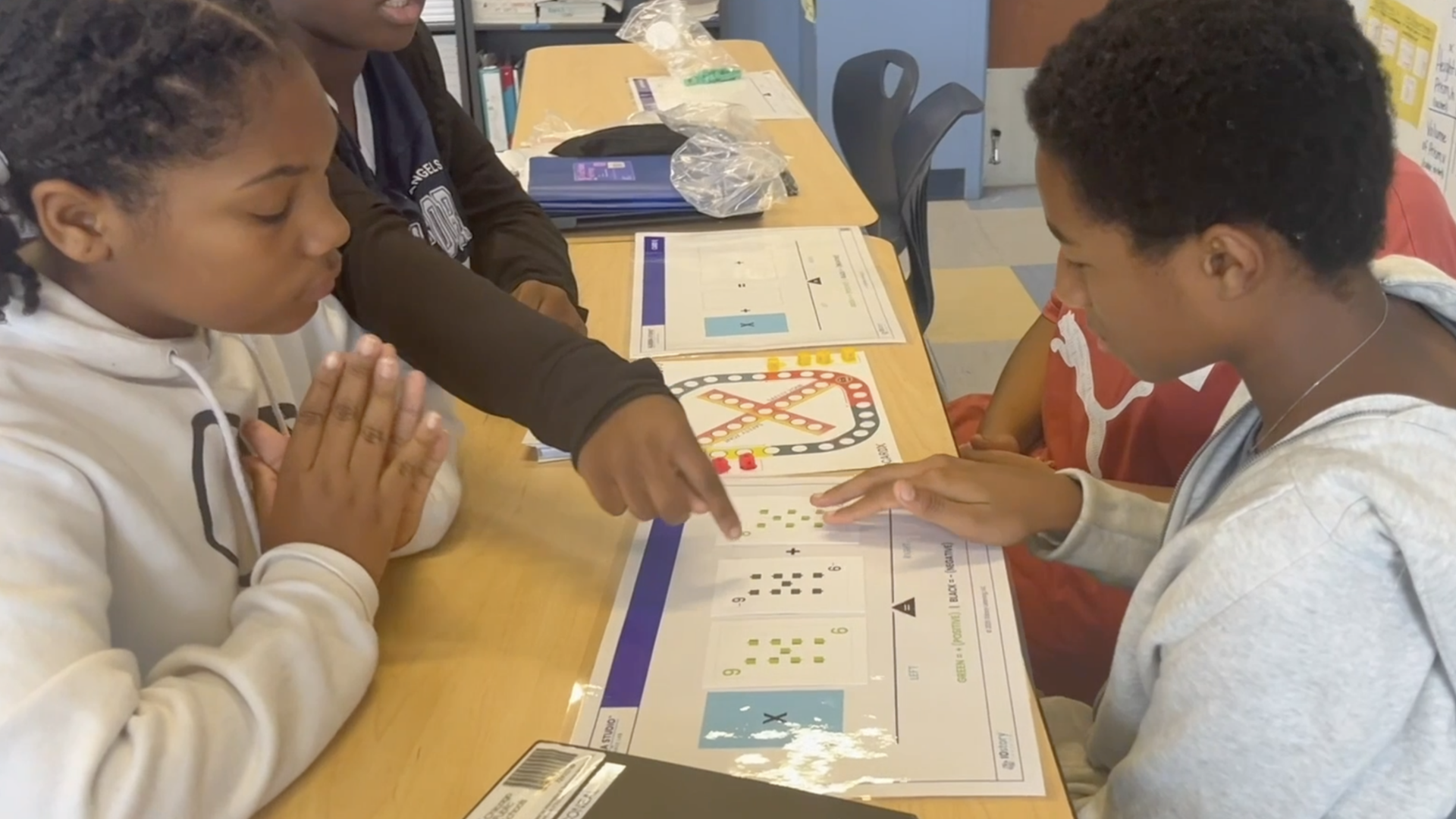
In Balance Lab, students first build a physical balance, weigh objects, and create “physical equations” (e.g., eraser = stopper + 3 cubes). They then transition to cups (variables) and cubes (constants) to model algebraic equations on the balance. Over 14 lessons they progress from one-step equations through negatives, the distributive property, and equations with variables on both sides — ultimately solving on paper.
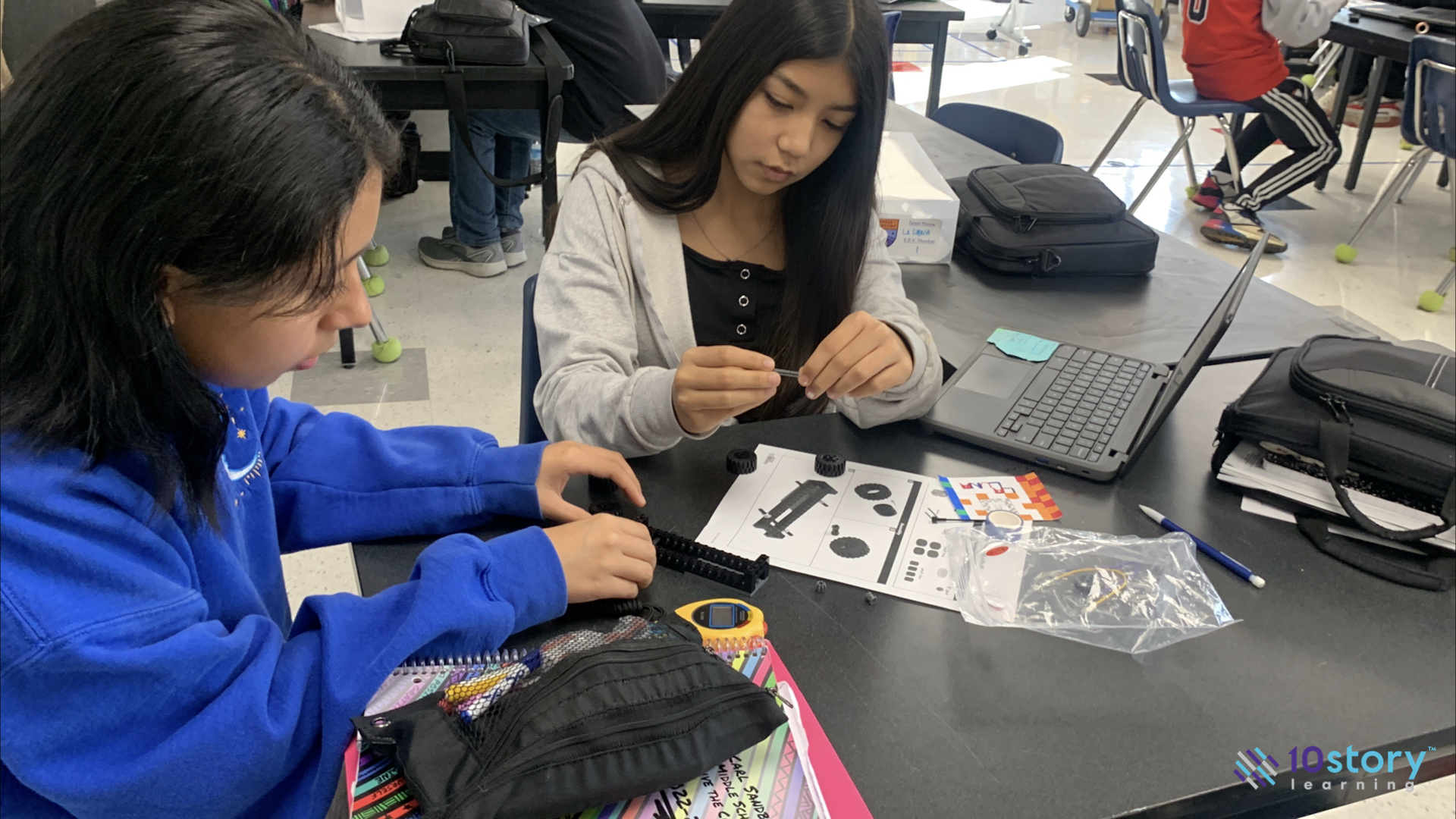
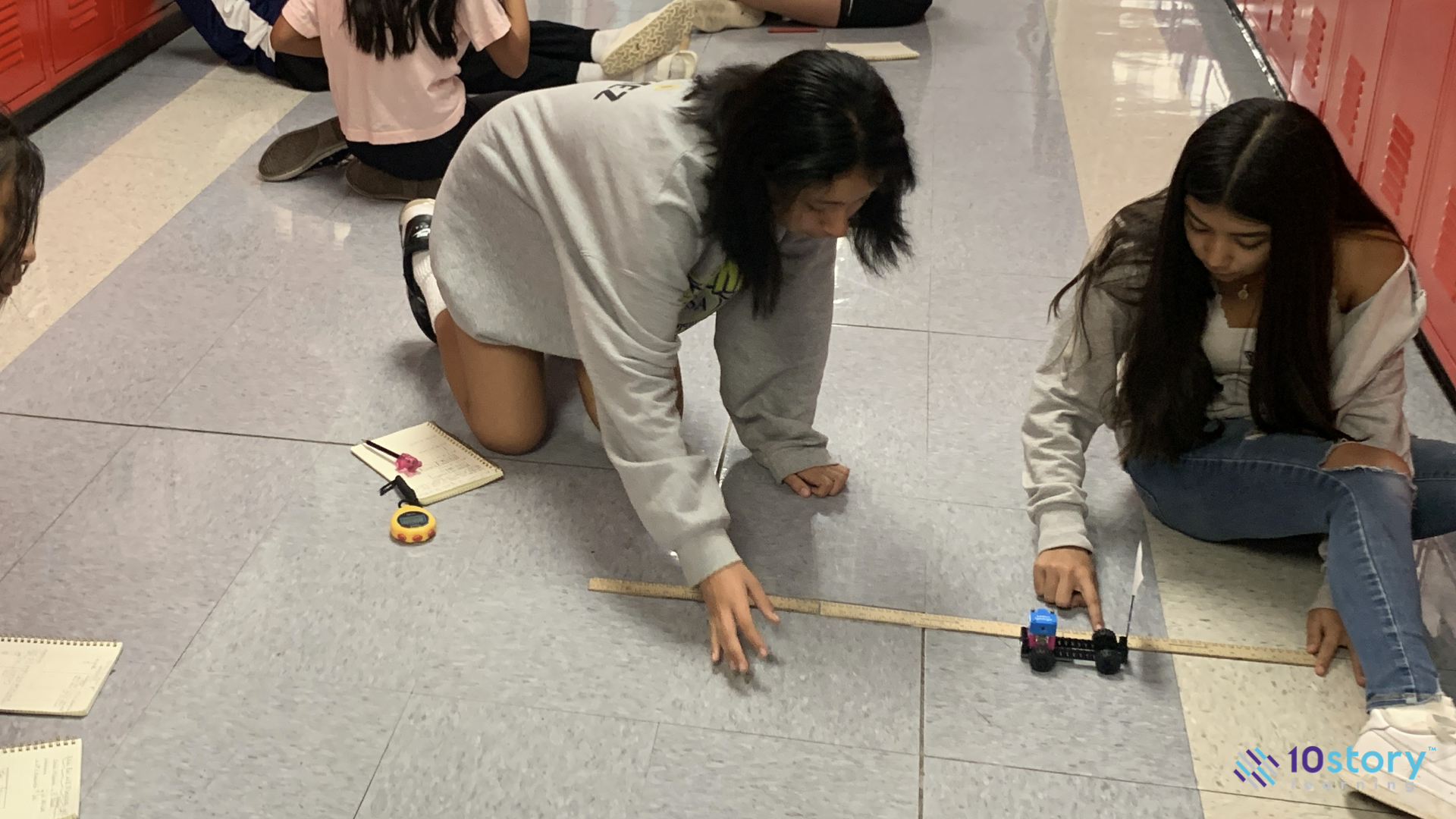
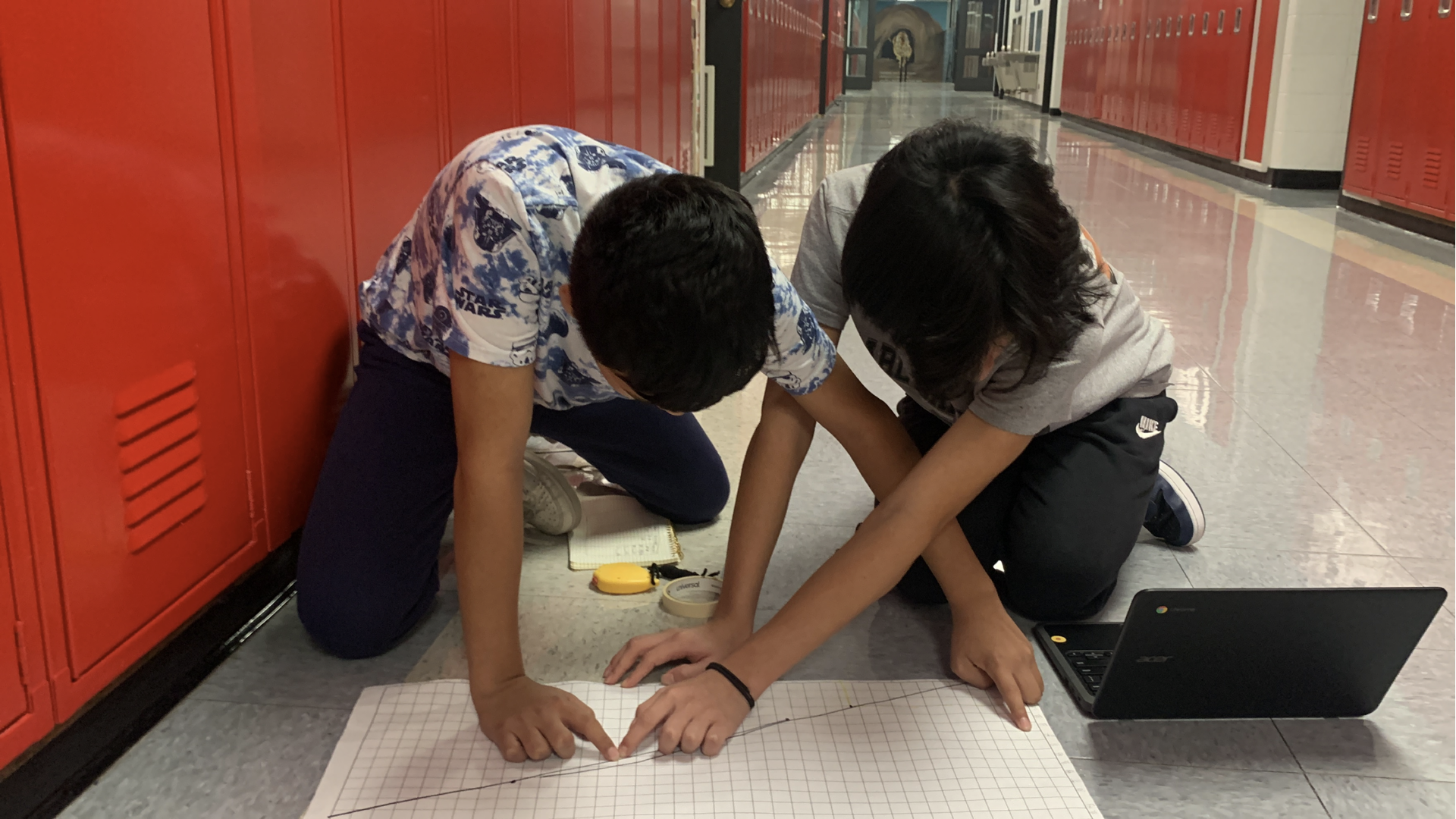
In Slope Lab, students build a Gravity Racer using Circuit Cubes™, first motorless on ramps. They collect real distance/time data, discover patterns, calculate average and unit rate, and encounter slope through their own data. They add a motor, explore constant rate, write equations in y = mx + b form, and compete in a Grand Prix where predictions require real algebra.
Balance Lab — 14 Lessons
Grades 6–9 · Equations & Equivalence · 15–20 hours
Slope Lab — 21 Lessons
Grades 7–9 · Rate, Slope & Linear Equations · 25–30 hours
Sample Lesson
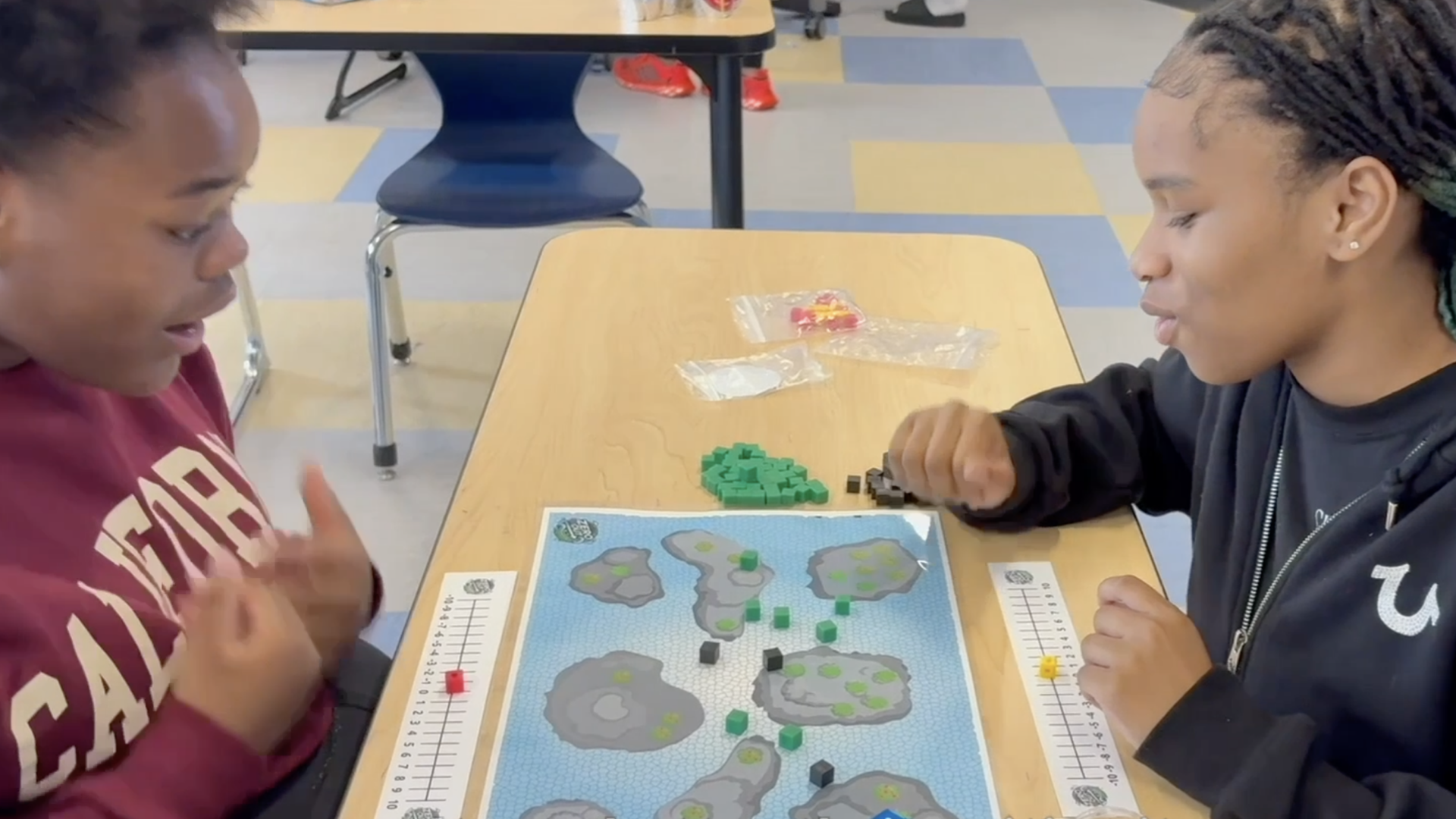
Howie introduces each lesson through embedded videos. Students watch, then work at their tables with physical materials — cups and cubes on a balance, or Circuit Cubes™ racers on ramps.
What’s in the Kit
All materials are fully durable — no consumable refill packs needed. The kit lasts year after year with no ongoing costs.
Balance Lab
Slope Lab
Standards Alignment
Balance Lab covers 6th-grade equations through 8th-grade variables on both sides (8.EE.C.7). Slope Lab covers 8th-grade slope and linear functions (8.EE, 8.F). Together they address the foundational half of Algebra 1.
Balance Lab
| Lessons | What Students Do | CCSS | TEKS | Florida |
|---|---|---|---|---|
| 1–4 | Build balance, weigh objects, physical equations, logic puzzles | 6.EE.B.5, 6.EE.B.6 | 6.10A, 6.10B, 6.7D | 6.AR.2.1, 6.AR.1.2 |
| 5–6 | Represent & solve equations with variables on both sides | 8.EE.C.7 | 8.8C | 8.AR.2.1 |
| 7 | Equations with negative numbers using zero pairs | 8.EE.C.7 | 8.8C | 8.AR.2.1 |
| 8 | Use balanced moves to isolate a variable | 8.EE.C.7a | 8.8C | 8.AR.2.1 |
| 9 | ZERO OUT — distributive property | 8.EE.C.7b, 6.EE.A.3 | 8.8C, 6.7D | 8.AR.2.1, 6.AR.1.3 |
| 10–11 | Balanced moves to paper; distributive property with negatives | 8.EE.C.7a, 8.EE.C.7b | 8.8C | 8.AR.2.1 |
| 12–13 | Solve complex equations on paper | 8.EE.C.7a, 8.EE.C.7b | 8.8C | 8.AR.2.1 |
| 14 | CARD X — create and solve equations | 8.EE.C.7a | 8.8C | 8.AR.2.1 |
Slope Lab
| Lessons | What Students Do | CCSS | TEKS | Florida |
|---|---|---|---|---|
| 1–4 | Build racer, calculate average, display & predict data | 6.SP.B.5c | 6.12C | 6.DP.1.2 |
| 5–7 | Acceleration, constant vs. changing rate | 8.F.B.5 | 8.5G | 8.F.1.3 |
| 8–10 | Constant rate — proportional relationships | 7.RP.A.2 | 7.4B | 7.AR.3.2 |
| 11–12 | Unit rate as slope | 7.RP.A.2b, 8.EE.B.5 | 7.4B, 8.4B | 7.AR.3.2, 8.AR.3.2 |
| 13–14 | Graphing, discover slope | 8.EE.B.5, 8.EE.B.6 | 8.4B, 8.4C | 8.AR.3.2, 8.F.1.1 |
| 15 | Write equations from data (y = mx) | 8.F.B.4 | 8.5A | 8.F.1.2 |
| 16 | Gear investigation — compare slopes | 8.F.A.2 | 8.5B | 8.F.1.1 |
| 17 | The fair race — y-intercept | 8.F.B.4 | 8.5A, 8.5E | 8.F.1.2 |
| 18–21 | Grand Prix — y = mx + b, predict & compare | 8.F.B.4, 8.F.A.3 | 8.5A, 8.5F | 8.F.1.2, 8.F.1.3 |
Kit Sizes & Pricing
Balance Lab + Slope Lab sold as a bundle. All materials fully durable — no refill packs, no ongoing costs.
Balance Lab + Slope Lab Bundle — Grades 6–9 · 35 Lessons · 40–50 Hours
Starter Kit
- 2 balance kits + cups & cubes
- 2 Circuit Cubes™ Gravity Racer kits
- 2 ramp kits, tape measures, stopwatches
- All equation mats, graphing sheets, game cards
- Teaching portal access
4-Team Kit
- 4 balance kits + cups & cubes
- 4 Circuit Cubes™ Gravity Racer kits
- 4 ramp kits, tape measures, stopwatches
- All shared materials and teacher resources
- Teaching portal access
Full Kit
- 7 balance kits + cups & cubes
- 7 Circuit Cubes™ Gravity Racer kits
- 7 ramp kits, tape measures, stopwatches
- All shared materials and teacher resources
- Teaching portal access
Cost per student at 4-Team level: $50/student for 40–50 hours (<$1.25/hour). All materials fully durable — year 2+ cost is $0.